Why DNA Replication Is Semiconservative: Essential Guide
Understanding the Semiconservative Nature of DNA Replication
Have you ever wondered why biologists describe DNA replication as semiconservative? This fundamental concept in molecular biology isn't just a technical term—it's the key to understanding how life preserves and passes on genetic information with remarkable accuracy. At its core, DNA replication is called semiconservative because one strand from the original DNA molecule is conserved (kept) in each new DNA molecule after replication completes.
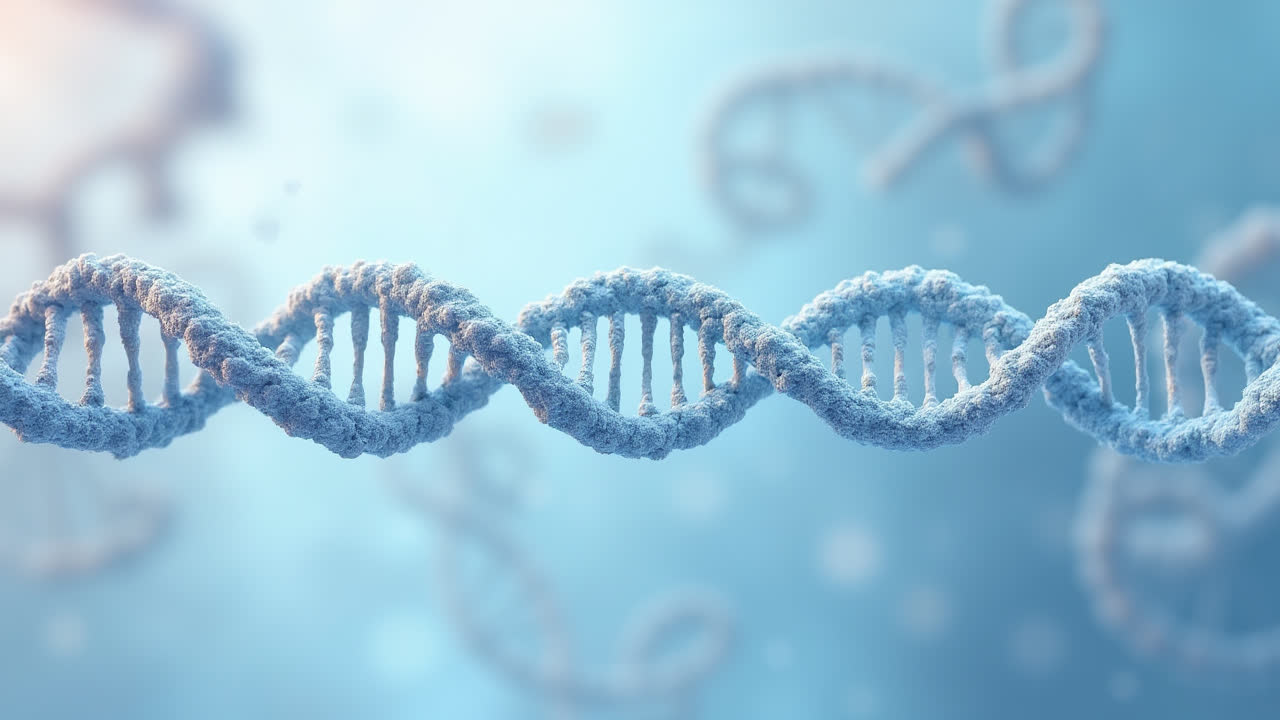
When DNA replicates, the double helix unwinds, and each original strand serves as a template for a brand new complementary strand. The original strands don't join back together; instead, they each pair with newly synthesized partners. This means that every resulting DNA molecule contains exactly one original strand and one newly built strand—hence the term "semiconservative." Neither completely new nor completely conserved, each daughter DNA molecule preserves half of the original material.
I remember being fascinated by this concept during my university days. The elegance of this mechanism struck me as one of nature's most brilliant solutions. This process ensures genetic continuity between generations of cells while allowing for the occasional beneficial mutation that drives evolution. Let's explore how this fascinating process works, why it matters, and how scientists proved this model correct through groundbreaking experiments.
The Mechanics of DNA Replication
Before diving into why DNA replication is semiconservative, we need to understand the basic mechanics of how DNA copies itself. DNA replication is an incredibly complex cellular process that creates an exact duplicate of a DNA molecule. The process begins when enzymes called helicases unwind the DNA double helix, separating the two strands by breaking the hydrogen bonds between complementary base pairs. This creates what's known as a replication fork—a Y-shaped region where the DNA strands separate.
DNA polymerase, the main enzyme responsible for DNA synthesis, can only add nucleotides in the 5' to 3' direction. This creates an interesting challenge since the two template strands run in opposite directions. On one template strand (the leading strand), DNA synthesis proceeds continuously. However, on the other template strand (the lagging strand), synthesis occurs in short fragments called Okazaki fragments that are later joined together by another enzyme called DNA ligase.
The entire process can be broken down into three key phases:
- Initiation - The process begins at specific DNA sequences called origins of replication, where the DNA strands separate and replication machinery assembles
- Elongation - DNA polymerase adds complementary nucleotides to the growing DNA strands following base-pairing rules (A with T, G with C)
- Termination - Replication ends when the replication machinery reaches the end of the chromosome or encounters a termination sequence
Throughout this entire process, each original strand serves as a template for synthesis of a new complementary strand. The result is two identical DNA molecules, each containing one strand from the original DNA (the template strand) and one newly synthesized strand. This pattern of inheritance—one old strand and one new strand—is what defines semiconservative replication.
Why Semiconservative Replication Matters
You might be wondering why it matters that DNA replication is semiconservative rather than, say, conservative (where the original DNA would remain intact and an entirely new copy would be made) or dispersive (where fragments of old and new DNA would be randomly distributed between the two new molecules). The semiconservative nature of DNA replication offers several crucial advantages that support life as we know it.
First and foremost, semiconservative replication provides a brilliant error-checking mechanism. Since one strand always comes from the original DNA, it serves as a reliable template against which the new strand can be checked for accuracy. DNA polymerase has built-in proofreading capabilities, allowing it to detect and correct mistakes during synthesis. If an incorrect nucleotide is added, the enzyme can remove it and try again. This error-checking is essential because it keeps mutation rates low—about one error per billion base pairs—ensuring genetic stability.
Additionally, the semiconservative mechanism means that any damage to the original DNA strand can potentially be repaired during replication. Since each daughter molecule contains one original strand, repair enzymes can use the undamaged complementary strand as a template to fix problems in the damaged strand. This redundancy provides a crucial safeguard for genetic information.
In multicellular organisms like us, semiconservative replication takes on even greater importance. As our cells divide throughout our lifetime—from embryonic development to adulthood—the semiconservative nature of DNA replication helps ensure that the genetic instructions in a skin cell, for example, remain identical to those in the original fertilized egg from which we developed. This remarkable fidelity is what allows complex organisms to develop and function properly.
The Historic Meselson-Stahl Experiment
The semiconservative model of DNA replication wasn't always accepted as fact. In the 1950s, after Watson and Crick proposed the double helix structure of DNA, scientists debated how this molecule might replicate itself. Three possible models emerged: the semiconservative model (which we now know is correct), the conservative model, and the dispersive model.
In 1958, two scientists named Matthew Meselson and Franklin Stahl designed an elegant experiment to determine which model was correct. Their work is often cited as one of the most beautiful experiments in biology, and I've always thought it deserves more recognition in popular science. They grew E. coli bacteria in a medium containing a "heavy" isotope of nitrogen (15N) until all the bacterial DNA contained this heavy nitrogen.
They then transferred the bacteria to a medium with normal "light" nitrogen (14N) and allowed the bacteria to replicate. After one generation of replication, they extracted the DNA and used density gradient centrifugation to determine its density. According to the semiconservative model, the DNA after one round of replication should have intermediate density (one heavy strand, one light strand). After a second round of replication, half the DNA should have intermediate density and half should have light density.
This is exactly what Meselson and Stahl observed, providing compelling evidence for the semiconservative model. Their experiment definitively showed that during replication, each strand of the original DNA serves as a template for a new complementary strand, resulting in two DNA molecules each containing one original strand and one new strand.
Comparison: DNA Replication Models
| Feature | Semiconservative Model | Conservative Model |
|---|---|---|
| Distribution of original DNA strands | Each daughter molecule receives one original strand | One daughter molecule receives both original strands |
| Distribution of new DNA strands | Each daughter molecule receives one newly synthesized strand | One daughter molecule contains only new strands |
| Experimental evidence | Supported by Meselson-Stahl experiment | Refuted by experimental evidence |
| Error checking potential | High (each new strand can be checked against original template) | Lower (no template strand in one daughter molecule) |
| DNA repair capability | Enhanced (original strand can guide repair of new strand) | Limited (no reference template in one molecule) |
| Energy efficiency | More efficient (utilizes existing strands as templates) | Less efficient (requires completely new synthesis) |
| Observed in nature | Universal among all known living organisms | Not observed in biological systems |
| Resulting DNA composition after one division | Two hybrid molecules (50% old, 50% new) | One original molecule, one entirely new molecule |
Leading and Lagging Strand Synthesis
One fascinating aspect of semiconservative replication is how it handles the antiparallel nature of DNA strands. DNA strands run in opposite directions—one from 5' to 3' and the other from 3' to 5'. Yet DNA polymerase can only add nucleotides to the 3' end of a growing DNA strand. This creates an interesting challenge during replication.
On the leading strand, synthesis is relatively straightforward. DNA polymerase can move continuously in the same direction as the replication fork, adding nucleotides one after another. But on the lagging strand, synthesis must occur in the opposite direction of fork movement. The solution? The lagging strand is synthesized in short fragments (Okazaki fragments) that are later joined together.
This asymmetric synthesis—continuous on one strand and discontinuous on the other—is a direct consequence of the semiconservative nature of DNA replication combined with the directional constraints of DNA polymerase. It's another example of how life has evolved elegant solutions to complex biochemical challenges.
During my time working in a molecular biology lab, I was always struck by how these seemingly complicated processes occur billions of times in our bodies without us giving them a second thought. The precision with which our cells replicate DNA—making about 1 mistake per billion base pairs—is truly remarkable. And it all stems from the semiconservative mechanism that ensures each new DNA molecule inherits one pristine strand from its parent.
Frequently Asked Questions About Semiconservative DNA Replication
Why is DNA replication called semiconservative instead of conservative?
DNA replication is called semiconservative because each new DNA molecule formed contains exactly one strand from the original DNA molecule (which is conserved) and one newly synthesized strand. The term "semi" means half, indicating that half of the original DNA is preserved in each new molecule. In contrast, a conservative model would result in one completely original DNA molecule and one entirely new molecule after replication, which isn't how DNA actually replicates in nature.
What would happen if DNA replication was not semiconservative?
If DNA replication was not semiconservative, several problems could arise. In a conservative model, one daughter cell would receive DNA with no template strand, potentially leading to higher mutation rates and reduced ability to repair DNA damage. In a dispersive model, fragments of old and new DNA would be randomly distributed, making error checking more difficult. The semiconservative mechanism provides optimal conditions for maintaining genetic fidelity by ensuring each new DNA molecule has a reference template (the original strand) against which the new strand can be proofread and repaired.
How did scientists prove that DNA replication is semiconservative?
Scientists proved that DNA replication is semiconservative through the famous Meselson-Stahl experiment in 1958. They grew E. coli bacteria in a medium containing heavy nitrogen (15N) and then transferred them to a medium with normal nitrogen (14N). After one round of replication, the DNA had intermediate density (one heavy strand, one light strand). After two rounds, half the DNA had intermediate density and half had light density. These results matched the predictions of the semiconservative model and ruled out both the conservative and dispersive models, conclusively proving that DNA replication follows a semiconservative pattern.
Conclusion: The Elegant Wisdom of Semiconservative Replication
When we step back and consider the elegance of semiconservative DNA replication, it's hard not to be amazed by this fundamental biological process. By preserving one original strand in each new DNA molecule, life ensures reliable transmission of genetic information while still allowing for the occasional beneficial mutation that drives evolution.
The semiconservative nature of DNA replication provides built-in error checking, enhances DNA repair capabilities, and maintains genetic stability across countless cell divisions. From bacteria to humans, this mechanism works with remarkable precision to ensure that the instructions for life are faithfully passed from cell to cell and from generation to generation.
Understanding why DNA replication is semiconservative gives us insight into one of life's most fundamental processes. It reminds us that even at the molecular level, biology has evolved elegant solutions to complex problems. And isn't that what makes science so fascinating? The more we learn about how life works, the more we can appreciate the beautiful complexity that exists in every living cell.