Mastering Onomatopoeia: 50+ Sound Words to Enhance Your Writing
What Is Onomatopoeia? Understanding Sound-Based Words
Onomatopoeia refers to words that phonetically imitate, resemble, or suggest the sound of what they describe. Derived from the Greek "onomatopoiia" meaning "word-making," these expressive words create an immediate sensory connection with readers. When you read an onomatopoeic word, your brain naturally associates it with the actual sound, making your reading experience more immersive and vivid.
Unlike many technical literary devices, onomatopoeia has an intuitive quality—you can often understand what an onomatopoeic word means even if you've never encountered it before. This is because the word itself mimics the natural sound it represents. When you read "hiss," "whoosh," or "clatter," your brain automatically processes these as sound representations, creating an auditory dimension to written text.
What makes onomatopoeia particularly interesting is how it bridges the gap between written language and sensory experience. In linguistics, most words have arbitrary relationships to what they represent—the word "tree" doesn't look or sound like an actual tree. But onomatopoeic words break this pattern by establishing a direct sonic connection between the word and its meaning. This unique feature makes them powerful tools for enhancing descriptive writing.
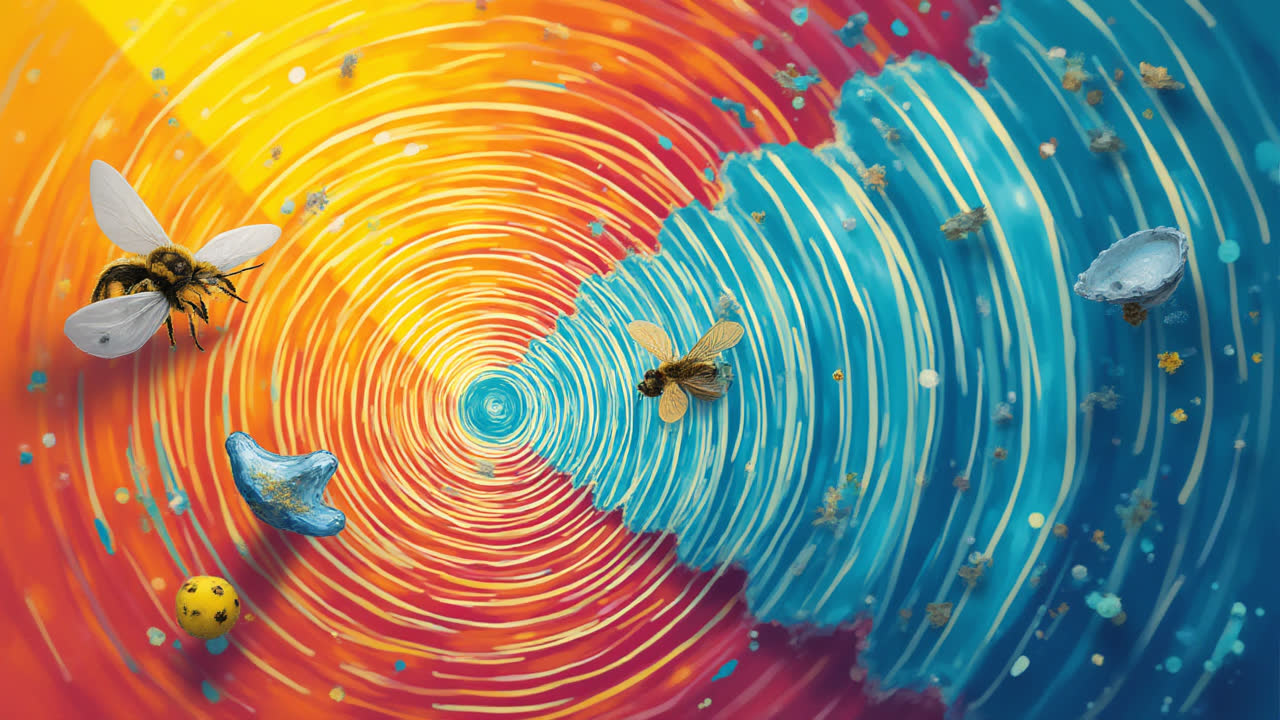
"The buzzing bees flew around the garden while water drip-dropped from the leaves after the morning rain."
Categories of Onomatopoeic Words With Examples
Onomatopoeic words span a wide range of sounds from our environment. They can be broadly categorized based on their sound sources, helping writers choose the perfect sound word for any situation. Here's how these expressive words are typically grouped:
Water Sounds
Animal Sounds
Human Sounds
Impact Sounds
Movement Sounds
Machine Sounds
Each category contains dozens of nuanced words that capture specific sound qualities. For instance, water doesn't just "splash"—it can gurgle, drip, plop, spray, or gush depending on its volume and movement. Similarly, human vocalizations range from giggling and mumbling to groaning and chattering. This rich vocabulary allows writers to create precise auditory imagery that resonates with readers.
What's fascinating about onomatopoeic words is their versatility in parts of speech. Many can function as both nouns and verbs, adding to their utility in creative writing. For example: "The car engine gave a loud rumble" (noun) versus "The thunder rumbled in the distance" (verb). This grammatical flexibility makes onomatopoeic words particularly valuable for writers seeking to craft dynamic, sensory-rich narratives.
Onomatopoeia Across Different Languages
One of the most intriguing aspects of onomatopoeia is how these sound-mimicking words differ across languages and cultures. Despite representing the same natural sounds, onomatopoeic words can vary dramatically between languages. This variation occurs because different cultures perceive and interpret sounds through their own unique phonological filters.
Consider how dogs bark in different languages: English-speaking dogs say "woof woof" or "bow wow," while Japanese dogs say "wan wan," Greek dogs say "gav gav," Spanish dogs say "guau guau," and French dogs say "ouah ouah." These differences highlight how cultural and linguistic factors shape our perception and representation of identical sounds. Even though dogs make the same sound worldwide, humans interpret and transcribe these sounds according to the phonetic patterns of their native languages.
This cross-linguistic variation extends to virtually all categories of onomatopoeic words. The sound of a rooster crowing is "cock-a-doodle-doo" in English, "kikeriki" in German, "kukuriku" in Croatian, and "cocorico" in French. These differences aren't random—they reflect each language's phonological system and the sounds that native speakers are accustomed to hearing and producing. This fascinating aspect of onomatopoeia reveals how deeply language is connected to cultural perception and interpretation of the world around us.
Onomatopoeia in Literature and Poetry
Throughout literary history, masterful writers have employed onomatopoeia to create vivid sensory experiences for their readers. This device is particularly powerful in poetry, where sound and rhythm are essential components of the artistic expression. Famous poets like Edgar Allan Poe expertly used onomatopoeia to enhance the musical qualities of their verses and create immersive atmospheres.
In Poe's famous poem "The Bells," onomatopoeic words dominate the soundscape: "How they clang, and clash, and roar!" These words don't merely describe the sound of bells—they recreate the actual auditory experience through language. Similarly, in "The Raven," Poe's use of words like "tapping" and "rapping" establishes a haunting rhythm that mirrors the ominous atmosphere of the poem.
Shakespeare, too, was a master of onomatopoeic expression. In "The Tempest," he writes: "Hark, hark! Bow-wow. The watch-dogs bark! Bow-wow." This playful use of animal sounds brings a lively dimension to the text. Alfred Noyes similarly employs onomatopoeia in "The Highwayman" with lines like "Over the cobbles he clattered and clashed in the dark inn-yard," where the harsh consonants echo the horse's hooves striking stone.
Beyond poetry, prose writers use onomatopoeia to enhance descriptions and create more engaging narratives. From children's literature with its "choo-choo" trains and "tick-tock" clocks to sophisticated novels where subtle sound words create ambiance, onomatopoeia serves as a bridge between written text and sensory experience. By incorporating words that echo real-world sounds, writers can create more immersive worlds that engage readers on multiple sensory levels.
Onomatopoeia vs. Sound Symbolism: Understanding the Difference
| Feature | Onomatopoeia | Sound Symbolism |
|---|---|---|
| Definition | Words that phonetically imitate the sound they describe | Words where sounds suggest non-auditory qualities |
| Direct Sound Connection | Direct imitation of actual sounds | Indirect connection between sound and meaning |
| Examples | Buzz, splash, meow, bang | Glimmer, slither, tiny, gigantic |
| Primary Sensory Domain | Exclusively auditory | Can relate to size, texture, movement, etc. |
| Cross-linguistic Variation | High variation between languages | More consistent patterns across languages |
| Recognition | Easily recognizable even in unfamiliar words | More subtle, often unconsciously processed |
| Cultural Influence | Heavily influenced by language phonology | Shows more universal patterns |
| Linguistic Classification | Form of mimetic language | Broader category of sound-meaning relationships |
How to Use Onomatopoeia in Your Writing
Incorporating onomatopoeia into your writing can transform flat descriptions into vibrant sensory experiences. When used effectively, these sound-mimicking words create an immediate connection with readers, helping them not just understand but feel your narrative. Whether you're writing fiction, poetry, or even professional content, thoughtful use of onomatopoeic words can significantly enhance your writing's impact.
The key to using onomatopoeia effectively lies in moderation and context. Overloading your writing with sound words can make it seem childish or cartoonish—imagine a paragraph filled with "bams," "pows," and "zaps." Instead, select specific moments where sound plays a crucial role in the scene or where highlighting a sound would deepen the reader's immersion. For instance, in a tense scene, the "click" of a door latch can carry significant weight, while the "patter" of rain against windows can establish a melancholic mood.
Consider your audience and genre when selecting onomatopoeic words. Children's literature often employs more obvious and playful sound words, while literary fiction might favor subtle onomatopoeia integrated seamlessly into sophisticated prose. Technical writing rarely features obvious sound words but may still benefit from carefully chosen verbs that suggest sound—"the machine whirred to life" provides more sensory information than "the machine started."
Remember that effective onomatopoeia often works on a subconscious level. Readers may not consciously register that "whisper," "murmur," or "hush" are onomatopoeic words, but these terms still create subtle auditory impressions that enrich the reading experience. By thoughtfully incorporating sound words that align with your narrative's mood and sensory landscape, you can create more engaging, immersive writing that resonates with readers long after they've finished reading.
Frequently Asked Questions About Onomatopoeia
Why is onomatopoeia important in creative writing?
Onomatopoeia is crucial in creative writing because it adds a sensory dimension that helps readers experience the story more vividly. By incorporating words that mimic actual sounds, writers create a more immersive environment that engages readers' auditory imagination. This literary device bridges the gap between text and real-world experience, making descriptions more dynamic and memorable. Particularly in poetry and children's literature, onomatopoeic words enhance rhythm and musical qualities while helping establish tone and atmosphere in all forms of creative writing.
Can onomatopoeic words function as different parts of speech?
Yes, many onomatopoeic words can function as different parts of speech, making them versatile tools for writers. They commonly appear as both nouns and verbs. For example, "crash" can be a noun ("I heard a crash from the kitchen") or a verb ("The waves crashed against the shore"). Some can also function as adjectives or adverbs. This grammatical flexibility allows writers to incorporate sound elements into various sentence structures, creating more dynamic and expressive prose without repetition or awkward phrasing.
Why do onomatopoeic words differ between languages?
Onomatopoeic words differ between languages because each language has its own phonological system—its own set of sounds and sound combinations. When speakers of different languages hear the same sound, they interpret it through the filter of sounds available in their native language. Additionally, cultural factors influence how sounds are perceived and represented. This explains why a dog's bark is "woof woof" in English but "wan wan" in Japanese. These differences highlight how language is not just a tool for communication but also a lens through which we perceive and categorize sensory experiences in culturally specific ways.
Conclusion: The Lasting Impact of Sound Words
Onomatopoeia represents a unique intersection of sound and meaning in language, creating words that directly connect our auditory experiences with written text. From the pitter-patter of raindrops to the boom of thunder, these expressive words help bridge the gap between silent reading and multisensory imagination.
As we've explored, onomatopoeic words enrich literary works across genres and time periods, from Shakespeare's plays to contemporary novels and poetry. Their power lies in their ability to create immediate sensory connections, making them valuable tools for writers seeking to craft immersive narratives that engage readers on multiple levels.
Whether you're a writer looking to enhance your descriptive toolkit or a language enthusiast fascinated by how words capture sensory experiences, onomatopoeia offers a window into the creative possibilities of language. By understanding and thoughtfully employing these sound-mimicking words, we can create more vibrant, evocative communication that resonates with authentic human experience.