Roasting vs Baking: 7 Critical Differences You Should Know
What Exactly Is Roasting?
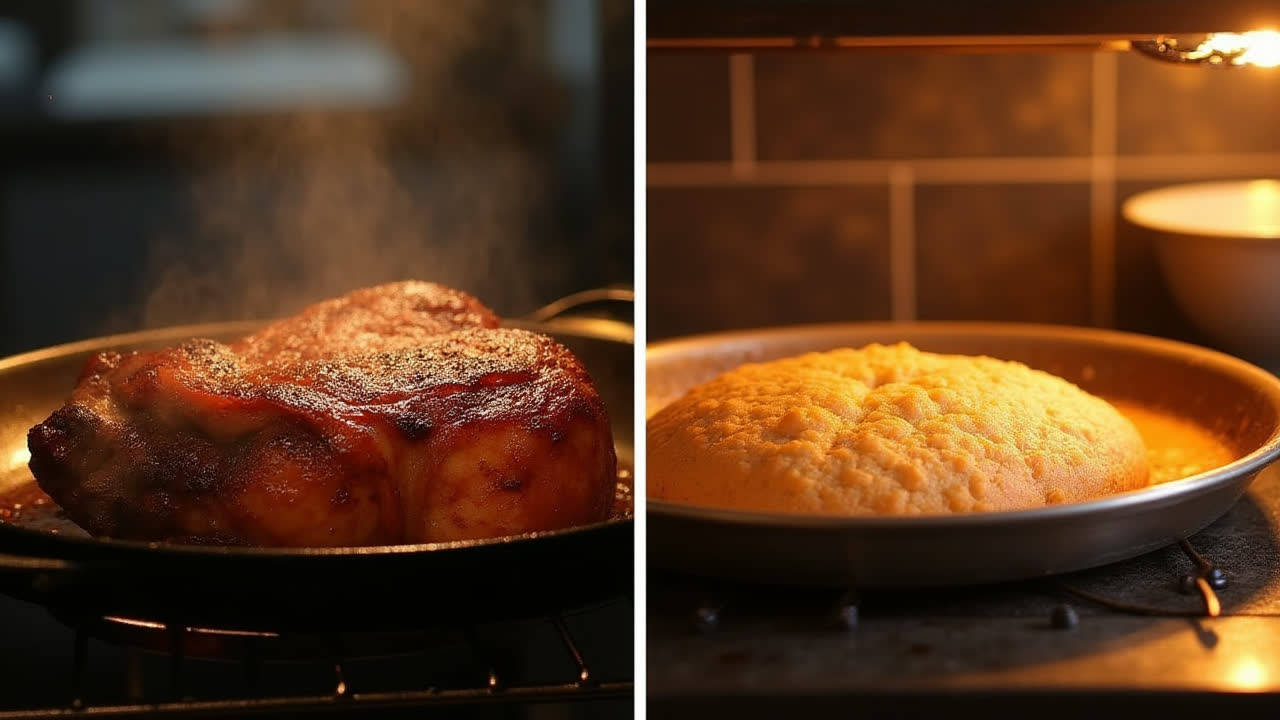
Roasting is a dry-heat cooking method where hot air completely surrounds the food, cooking it evenly on all sides. Traditionally, roasting meant cooking over an open fire, but in modern kitchens, we typically roast in ovens. The food is always placed uncovered—usually in an open pan—allowing the exterior to brown and develop a flavorful crust.
When roasting meats, have you ever noticed how chefs often place food on a rack? This isn't just fancy presentation. The rack suspends the meat over a pan, preventing it from sitting in its own juices as it cooks. This clever technique ensures even browning and helps develop that gorgeous caramelized exterior we all love. I learned this the hard way after several soggy-bottomed roasts!
Roasting typically utilizes higher temperatures—usually between 375°F and 450°F—to create that beautiful caramelization on the outside while maintaining juiciness inside. The process works best for foods with solid structures that can withstand this high heat without losing their shape. Think about a gorgeous beef tenderloin or those perfectly crispy roasted potatoes that are creamy inside but golden and crunchy outside.
Temperature selection is crucial when roasting. For tender, smaller meat cuts, high temperatures above 400°F work beautifully. However, larger roasts require a gentler approach with low to medium temperatures (250°-375°F) so they cook slowly and evenly without burning the exterior. Most vegetables roast perfectly at a moderate temperature around 375°F. The size and density of what you're cooking matters enormously—something I wish someone had told me years ago!
Understanding the Baking Process
Baking, like roasting, is a dry heat cooking method that takes place in an oven. However, baking is typically applied to foods that don't have a solid structure before cooking. Think about bread dough or cake batter—these foods only gain their firm, delicious structure during the baking process.
The magic of baking happens as heat gradually transforms these soft mixtures into structured foods. When you place a pan of cake batter in the oven, several fascinating processes occur simultaneously. The moisture begins to evaporate, proteins coagulate, starches gelatinize, and leavening agents create gas bubbles that expand in the heat. All of these reactions work together to transform your gooey batter into a light, fluffy cake with a stable structure.
Baking temperatures typically range from 300°F to 400°F depending on what you're making. Bread often requires higher temperatures to achieve that perfect crust, while delicate pastries need gentler heat to prevent burning. Unlike roasting, baking sometimes involves covered pans, especially when you want to trap moisture or prevent over-browning.
While we typically associate baking with sweet treats, the term also applies to many savory dishes. Casseroles, lasagna, and even certain meat preparations—like meatloaf or fish with breading—are considered baked rather than roasted. This is because these dishes either contain moisture that needs to be maintained or have coatings that would burn at higher roasting temperatures. I once tried "roasting" a lasagna at high heat... let's just say the charred results taught me a valuable lesson about respecting cooking methods!
Key Differences Between Roasting and Baking
While both roasting and baking use dry heat in an oven, several crucial differences determine which method you should choose. The primary distinction lies in the food structure. Roasting is ideal for foods that already have a solid structure before cooking—think meats and firm vegetables. In contrast, baking works for foods that start without a solid structure and develop one during cooking, like bread and cakes.
| Comparison Point | Roasting | Baking |
|---|---|---|
| Food Structure | Solid structure before cooking | Develops structure during cooking |
| Typical Foods | Meats, poultry, firm vegetables | Bread, cakes, pastries, some meat preparations |
| Cooking Container | Usually uncovered in an open pan | Often in covered pans or specialized bakeware |
| Temperature Range | Medium to high (350°F-450°F) | Low to medium (300°F-400°F) |
| Primary Goal | Browning exterior while cooking interior | Even cooking and structure development |
| Fat Usage | Often uses added fats for basting or coating | Fat usually incorporated into the mixture |
| Cooking Rack | Frequently used to elevate food | Rarely used |
| Moisture Level | Tends to remove moisture | Often preserves moisture |
Another significant difference is the cooking container. Roasting is almost always done in an open, uncovered pan to promote browning and caramelization. Baking, however, sometimes uses covered containers, especially when you want to trap steam or prevent over-browning on delicate items.
The primary goal of each method also differs. Roasting aims to create a flavorful exterior while cooking the interior at a constant rate. Baking focuses more on the even transformation of the entire food, particularly ensuring that leavened items rise properly. I've found that understanding these goals helps me make better decisions about which method to use when recipes aren't clear.
Pro Tip: When to Choose Roasting vs Baking
Still confused about which method to use? Here's my simple rule of thumb: If your food already has a definite shape that you want to maintain while adding flavor and color, roast it. If your food starts as a batter, dough, or needs to rise or set during cooking, bake it. Some foods, like certain fish or chicken breast preparations, can be successful with either method—experiment to find which texture you prefer!
Common Roasting Techniques and Tips
Mastering the art of roasting can elevate simple ingredients to spectacular dishes. One of my favorite techniques is high-heat roasting, where you start with an extremely hot oven (around 450°F) for the first 15-20 minutes to develop color and flavor, then reduce the temperature to finish cooking. This works wonderfully for beef roasts, creating that restaurant-quality crust while maintaining a juicy interior.
When roasting vegetables, uniform sizing is crucial. I've learned that cutting vegetables into similar-sized pieces ensures they cook evenly. Tossing them in oil before roasting helps promote browning and prevents sticking. For root vegetables like potatoes, carrots, and parsnips, I find that a 375°F oven creates the perfect balance of caramelized exterior and tender interior.
Don't be afraid of seasoning generously when roasting! The high heat intensifies flavors, so what might seem like too much salt and herbs before cooking will be perfectly balanced in the finished dish. Another game-changing tip I've discovered is to let meats rest after roasting. This allows the juices to redistribute throughout the meat rather than running out when you cut into it immediately after cooking.
Roasting pans matter more than you might think. Heavy, durable pans conduct heat better than flimsy ones, leading to more even cooking. For the best results, choose a pan that's just large enough to hold your food without crowding. Overcrowding leads to steaming rather than proper roasting, which prevents that beautiful caramelization we're aiming for.
Essential Baking Methods and Advice
Successful baking relies heavily on precision and understanding the science behind the process. Unlike roasting, where you can often adjust seasonings and cooking times by intuition, baking requires more exact measurements and timing. This is because the chemical reactions that create structure in baked goods depend on precise ratios of ingredients.
Oven temperature is absolutely critical in baking. Many home ovens run hotter or cooler than the displayed temperature, which can wreak havoc on delicate baked goods. I highly recommend investing in an oven thermometer to ensure accuracy. Preheating is also non-negotiable—putting dough into a cool oven prevents proper rising and texture development.
The position of your baking rack matters tremendously. For most baked goods, the middle rack provides the most even heat distribution. When baking multiple items, avoid the temptation to cram everything in at once. Different rack positions receive different heat intensities, which can lead to inconsistent results.
Understanding leavening agents revolutionized my baking. Baking powder, baking soda, and yeast all work differently and aren't interchangeable. Baking soda needs acid to activate (like buttermilk or lemon juice), while baking powder contains its own acid. Yeast, meanwhile, needs time to ferment and create gas bubbles. Knowing these differences helps you troubleshoot when things go wrong—something that happens to even experienced bakers!
Frequently Asked Questions About Roasting and Baking
Can I roast in a glass dish, or should I always use metal?
While you can roast in glass dishes, metal pans typically yield better results. Metal conducts heat more efficiently and promotes better browning and caramelization. Glass takes longer to heat up and can sometimes produce less crispy results. If using glass for roasting, reduce the oven temperature by about 25°F to prevent overcooking, as glass retains heat longer. For the best roasting results, heavy-duty metal pans or cast iron skillets are ideal, especially for meats and vegetables where you want that beautiful golden exterior.
Why does my cake always sink in the middle when baking?
A cake sinking in the middle usually indicates one of several common issues. The most frequent culprit is opening the oven door too early during baking, which causes a rapid temperature drop that prevents the cake structure from setting properly. Other causes include using expired leavening agents (check your baking powder date!), overmixing the batter which incorporates too much air, or removing the cake from the oven before it's fully baked. To test doneness, insert a toothpick into the center—it should come out clean or with a few crumbs, but no wet batter. Also, make sure you're using the correct pan size; too small a pan means the center can't cook through before the edges are done.
Is convection oven setting better for roasting or baking?
Convection settings, which use fans to circulate hot air, generally excel for roasting but require adjustments for baking. For roasting meats and vegetables, convection creates more even browning and can reduce cooking time by about 25%. The circulating air helps remove moisture from the surface, creating that desirable crispy exterior. For baking, however, convection can sometimes be too aggressive—it might cause cakes to rise unevenly or cookies to brown too quickly on the outside before cooking through. If using convection for baking, reduce the temperature by 25°F from what the recipe states and check for doneness earlier. Delicate items like soufflés and some cakes are best baked without convection. Many professional bakers prefer conventional settings for most pastries but switch to convection for crusty breads.
Conclusion: Choosing Between Roasting and Baking
Understanding the distinction between roasting and baking empowers you to make better cooking decisions and achieve more consistent results. Remember that roasting is ideal for foods with a solid structure—like meats and firm vegetables—where you want a browned, flavorful exterior. Baking works best for foods that need to develop structure during cooking, such as breads, cakes, and casseroles.
While the lines between these methods sometimes blur in modern cooking, knowing the fundamental differences helps you adapt recipes and troubleshoot when things don't turn out as expected. Have you ever wondered why your roasted vegetables turned out soggy? Perhaps they were overcrowded in the pan, causing them to steam rather than roast. Or why your cake didn't rise properly? The baking temperature might have been too low to activate the leavening agents effectively.
Cooking methods are tools in your culinary toolbox—the more you understand them, the more creative and successful you can be in the kitchen. Whether you're roasting a succulent chicken for Sunday dinner or baking a delicate soufflé for a special occasion, applying the right technique for the right food will elevate your cooking from good to exceptional. So next time you preheat your oven, take a moment to consider: should I be roasting or baking today?