Receptive vs Expressive Language: Understanding the Critical Differences
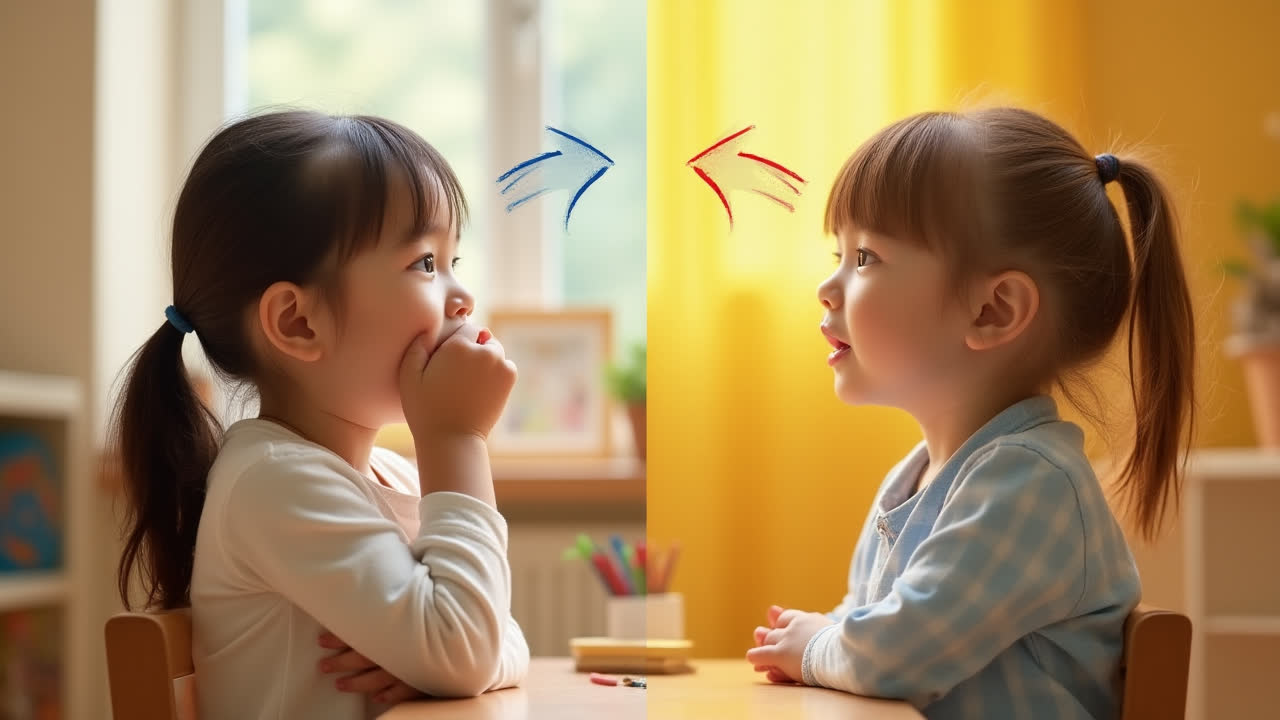
Have you ever wondered why some children understand everything you say but struggle to form sentences of their own? Or perhaps you've noticed the opposite—a child who talks endlessly but seems to miss important instructions? The answer lies in the fascinating distinction between receptive and expressive language skills. These two fundamental communication abilities develop at different rates and impact how we interact with the world around us.
As someone who's worked closely with language development specialists, I've seen firsthand how these skills shape a child's learning journey. Whether you're a parent, educator, or simply curious about language acquisition, understanding this distinction can provide valuable insights into how communication actually works.
What Is Receptive Language?
Receptive language refers to our ability to understand what we hear and read. It's essentially the "input" side of communication—how we process and comprehend language coming from others. Think of it as your brain's way of decoding the messages it receives through listening and reading.
When a baby turns toward the sound of their mother's voice or a toddler points to objects named in a picture book, they're demonstrating receptive language skills. These abilities form the foundation of all communication and typically develop before expressive language skills.
Receptive language isn't just about understanding individual words, though. It encompasses a range of complex skills including following directions, comprehending questions versus statements, recognizing different tones of voice, and understanding grammatical structures. When someone says, "Could you grab that blue folder on the shelf behind the plant?" your ability to process and act on that multi-step instruction relies entirely on your receptive language capabilities.
I remember working with a 4-year-old who could easily identify animals in a book when asked but couldn't follow simple two-step directions like "Put the crayon in the box and then clap your hands." This disconnect highlighted his specific receptive language challenges, even though other aspects of his language seemed on track.
What Is Expressive Language?
Expressive language is our ability to put thoughts into words and sentences. It's the "output" side of communication—how we express our ideas, needs, and feelings to others. While receptive language involves understanding, expressive language involves production.
The journey of expressive language begins when babies coo and babble in response to familiar voices. These early vocalizations are the building blocks of more complex communication. As children develop, their expressive skills grow to include naming objects, forming sentences, asking questions, and eventually crafting detailed narratives.
But expressive language isn't limited to verbal communication. It also encompasses facial expressions, gestures, and written expression. When you raise your eyebrows while asking a question or wave goodbye, you're using non-verbal expressive language to enhance your message. Similarly, the ability to express your thoughts in writing—whether in a quick text message or a lengthy essay—falls under the umbrella of expressive language skills.
I've always found it fascinating how children often understand far more than they can express. My niece went through a phase where she clearly understood complex instructions but would respond with simple three-word sentences. This gap between receptive and expressive abilities is perfectly normal in development—though the size of the gap varies from person to person.
Expressive language difficulties can manifest in various ways: struggling to find the right words, using limited vocabulary, forming grammatically incorrect sentences, or having trouble organizing thoughts into coherent speech. These challenges can be particularly frustrating because the person often knows exactly what they want to say but can't access the language tools to express it effectively.
The Developmental Sequence of Language Skills
Understanding the typical developmental sequence of language skills helps put the receptive-expressive relationship into perspective. Language acquisition follows a relatively predictable pattern, though the timing varies considerably from child to child.
Receptive language skills emerge first, beginning in the womb when fetuses start responding to their mother's voice. By birth, newborns already show preferences for familiar sounds and voices—a primitive form of receptive language. As infants develop, they begin to associate words with objects and actions, respond to their names, and follow simple directions.
Expressive language develops slightly later, beginning with those adorable coos and babbles around 2-3 months. By 12 months, many children speak their first recognizable words, and between 18-24 months, the famous "language explosion" often occurs, with vocabulary growing rapidly and two-word combinations emerging. Sentence structure becomes more complex between ages 2-5, with grammar rules gradually falling into place.
I've always found it remarkable how this pattern holds true across languages and cultures. Whether a child is learning Mandarin, Spanish, or English, receptive skills precede expressive ones, and development follows similar milestones. That said, there's enormous variation in what's considered "normal"—some children speak in full sentences by 18 months, while others might not do so until age 3, yet both can be developing perfectly normally.
The gap between receptive and expressive abilities typically narrows as children mature, but even in adulthood, most of us can understand more complex language than we regularly produce. Just think about how you might perfectly comprehend a sophisticated academic article but struggle to explain its contents in your own words!
Receptive vs Expressive Language: Key Differences
| Aspect | Receptive Language | Expressive Language |
|---|---|---|
| Definition | Ability to understand words and language | Ability to put thoughts into words and sentences |
| Primary Skills | Listening and reading comprehension | Speaking and writing |
| Developmental Timeline | Develops first (from birth) | Develops after receptive skills emerge |
| Early Signs | Responding to familiar voices, following simple commands | Cooing, babbling, using first words |
| Cognitive Demand | Lower cognitive load (recognition vs. recall) | Higher cognitive load (requires word retrieval) |
| Assessment Method | Pointing to pictures, following directions | Naming objects, describing events, answering questions |
| When Disordered | Difficulty understanding instructions, misinterpreting messages | Word-finding difficulties, grammatical errors, limited vocabulary |
| Intervention Difficulty | Generally easier to improve (can use visual supports) | Often more challenging to develop (requires production) |
Recognizing Language Difficulties
Being able to identify potential language difficulties early can make a tremendous difference in providing effective support. Since receptive and expressive language skills involve different processes, difficulties can occur in either area independently or in both simultaneously.
Signs of receptive language difficulties might include inconsistent responses to directions, difficulty following multi-step instructions, appearing to not listen or pay attention, and frequently asking "what?" or for repetition. Children with receptive language challenges may rely heavily on context clues and routines to compensate for what they don't understand verbally.
Expressive language difficulties, on the other hand, might present as limited vocabulary, using gestures instead of words, forming grammatically incorrect sentences, struggling to ask questions, or having trouble telling stories in a logical sequence. Word-finding problems—that frustrating tip-of-the-tongue feeling—are also common in expressive language disorders.
It's worth noting that language difficulties often contribute to behavioral issues, especially in young children who lack the self-awareness to recognize and communicate their struggles. A child who consistently ignores instructions might actually be struggling to understand them; likewise, a child who has frequent tantrums might be frustrated by inability to express needs effectively.
I once worked with a boy who was labeled as "defiant" in preschool because he rarely followed classroom rules. After assessment, we discovered he had significant receptive language delays—he simply wasn't processing the verbal instructions his teachers were giving. Once visual supports were implemented, his "behavior problems" virtually disappeared.
If you're concerned about a child's language development, seeking evaluation from a speech-language pathologist is the best course of action. These professionals can assess both receptive and expressive skills and determine whether development is following typical patterns or intervention might be beneficial.
Strategies for Supporting Language Development
Whether you're a parent, teacher, or caregiver, there are many ways to support healthy language development across both receptive and expressive domains. The good news is that many of these strategies are natural and intuitive—they're things we often do instinctively when interacting with children.
To boost receptive language skills, try these approaches:
- Use simple, clear language when giving directions
- Break complex instructions into smaller steps
- Pair verbal information with visual supports when possible
- Check for understanding by asking the child to repeat back what they heard
- Read regularly together, discussing the story and asking questions
- Play listening games like "Simon Says" or scavenger hunts
For expressive language development, consider these strategies:
- Model rich vocabulary and complete sentences
- Expand on what the child says (If they say "dog run," you might respond "Yes, the big dog is running fast!")
- Give choices that require verbal responses rather than just pointing
- Create reasons for communication (place favorite items in sight but out of reach)
- Use open-ended questions rather than yes/no questions
- Be patient—give children time to formulate their thoughts
The most important strategy of all might be creating a language-rich environment where communication is valued and encouraged. Children learn language best through meaningful interactions with responsive partners, not from passive exposure to screens or recordings.
I'm reminded of a family I worked with who transformed their daily routines into language-learning opportunities. Grocery shopping became a vocabulary lesson, bath time included songs and rhymes, and bedtime reading evolved into interactive storytelling. Their consistent, natural approach to language stimulation helped their daughter make remarkable progress in both receptive and expressive skills.
Frequently Asked Questions About Receptive and Expressive Language
Can a child have good expressive language but poor receptive language?
While receptive language typically develops before expressive language, there are cases where a child's expressive skills appear stronger than their receptive abilities. This is less common but can occur in specific circumstances. Some children develop excellent mimicry or memorization skills that make their expressive language seem more advanced than it actually is. They might use phrases and sentences they've heard without fully understanding the meaning.
This pattern is sometimes seen in children with certain developmental conditions like hyperlexia (advanced word recognition with limited comprehension) or in some children on the autism spectrum. However, when evaluated carefully, these children often have underlying receptive language challenges that may be masked by their seemingly fluent speech. If you suspect this pattern, a comprehensive evaluation by a speech-language pathologist is recommended.
At what age should the gap between receptive and expressive language start to close?
The gap between receptive and expressive language naturally starts to narrow around age 2-3 for most typically developing children. This coincides with the vocabulary explosion and rapid development of sentence structure that occurs during this period. By school age (5-6 years), children usually demonstrate a more balanced profile, though receptive skills often remain somewhat ahead of expressive abilities.
That said, there's significant variation in what's considered normal. Some children maintain a larger gap for longer periods without any cause for concern. What's more important than the absolute size of the gap is whether both receptive and expressive skills are progressing steadily. If either skill set plateaus or regresses, or if the gap seems unusually large, consultation with a language specialist would be appropriate.
How does bilingualism affect receptive and expressive language development?
Bilingual children typically follow the same pattern of receptive skills developing before expressive skills in both languages. However, there are some important considerations for bilingual language development. First, vocabulary may initially be distributed across both languages rather than duplicated—a child might know "apple" in English but only "perro" (dog) in Spanish, making their single-language vocabulary appear smaller even though their total conceptual vocabulary is comparable to monolingual peers.
Receptive skills in the home language often develop strongly, while expressive skills may temporarily lag in the less-dominant language, especially when children enter school or childcare settings. This temporary imbalance is normal and typically resolves with continued exposure to both languages. Research consistently shows that bilingualism does not cause language delays or disorders, though it may temporarily affect the pace or pattern of acquisition. Bilingual children might show stronger metalinguistic awareness—understanding language as a system—which can be an advantage for later academic learning.
Conclusion
The dance between receptive and expressive language skills forms the foundation of human communication. Understanding the differences between these two aspects of language can provide valuable insights for parents, educators, and anyone interested in how we learn to communicate.
Remember that while receptive skills typically develop first and may remain somewhat stronger throughout life, both aspects of language are essential for effective communication. The gap between understanding and expressing is a normal part of development that gradually narrows as children mature.
If you're concerned about language development in a child you care about, trust your instincts and seek professional guidance. Early intervention for language difficulties can make a tremendous difference in outcomes. And whether you're supporting a child with typical development or addressing specific challenges, know that the everyday interactions you provide—talking, reading, listening, responding—are powerful tools for nurturing language growth.
After all, language isn't just a skill to be mastered; it's the vehicle through which we connect with others and make sense of our world. By supporting both receptive and expressive language development, we're helping children unlock their full potential for communication, learning, and human connection.