Pleiotropy vs Polygenic Inheritance: Key Differences in Genetic Expression
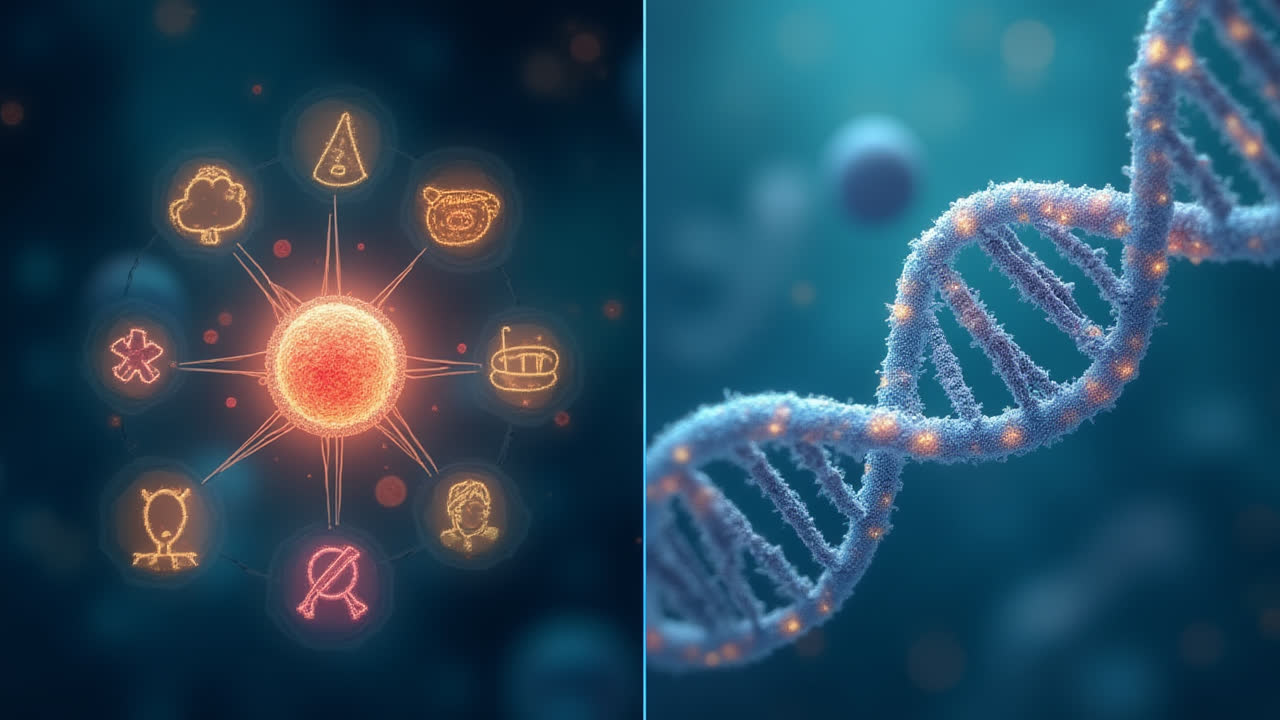
When studying genetics, understanding how genes influence traits is crucial for comprehending inheritance patterns and disease manifestations. Pleiotropy and polygenic inheritance represent two fascinating but contrasting genetic mechanisms that explain the relationship between genes and observable traits (phenotypes). While both concepts are fundamental to genetics, they operate in completely different ways, affecting how characteristics are expressed and inherited.
Have you ever wondered why some genetic disorders affect multiple seemingly unrelated parts of the body? Or why traits like height and skin color show such continuous variation instead of distinct categories? The answers lie in these two genetic phenomena that shape much of our biological diversity.
In this comprehensive guide, we'll explore the key differences between pleiotropy and polygenic inheritance, examine real-world examples of each, and understand their significance in genetics and medicine. Whether you're a student, healthcare professional, or simply curious about genetics, this comparison will provide valuable insights into how our genes shape who we are.
What is Pleiotropy?
Pleiotropy occurs when a single gene influences multiple traits or phenotypic characteristics. This genetic phenomenon follows traditional Mendelian inheritance patterns, where one gene determines specific traits. The term comes from the Greek words "pleio" (many) and "tropic" (effects), perfectly describing how a single genetic factor can create widespread effects throughout an organism.
In pleiotropic inheritance, the gene product (like a protein) might function in different tissues or cell types, creating various phenotypic effects. Sometimes, the gene might encode a signaling molecule that influences multiple developmental pathways. Since only one gene controls the traits in pleiotropy, offspring typically show only three possible genotypic outcomes following standard Mendelian ratios.
One interesting example of pleiotropy involves the coat color gene in mice. The dominant allele Y produces yellow coat color, while the recessive allele y produces agouti color. Mice with genotype yy have agouti coats, while those with Yy have yellow coats. However, mice with YY genotype not only have yellow coats but also experience embryonic lethality - demonstrating how one gene affects both coat color and survival.
A more extreme form of pleiotropy, known as antagonistic pleiotropy, occurs when a gene carries a mixture of both beneficial and harmful traits. For instance, the p53 gene suppresses undifferentiated cell proliferation (preventing cancer) but also inhibits stem cell proliferation (preventing tissue regeneration in older individuals). This phenomenon helps explain certain aspects of aging, where genes that increase fitness in youth may decrease it in old age.
Medical Examples of Pleiotropy
Pleiotropy explains why certain genetic disorders affect seemingly unrelated parts of the body. When mutations occur in pleiotropic genes, they can produce multiple symptoms across different organ systems. Here are some notable examples:
- Phenylketonuria (PKU): Caused by a mutation in the gene encoding phenylalanine hydroxylase enzyme, leading to mental retardation, reduced hair and skin pigmentation.
- Albinism: Alterations in melanin production affect skin, hair, and eye pigmentation.
- Marfan Syndrome: A disorder of connective tissue affecting the skeletal system, cardiovascular system, and eyes.
- Sickle Cell Anemia: A single mutation in the hemoglobin gene affects red blood cell shape, oxygen transport, and multiple organ systems.
- Autism and Schizophrenia: Some genetic factors in these conditions show pleiotropic effects across brain development and function.
Understanding Polygenic Inheritance
In stark contrast to pleiotropy, polygenic inheritance occurs when multiple genes collectively influence a single trait. This represents a non-Mendelian inheritance pattern where each contributing gene has a small, cumulative effect on the overall phenotype. Think of it as a team of genes working together to produce one outcome, rather than one gene creating many outcomes.
An interesting aspect of polygenic inheritance is that the contributing genes often exhibit incomplete dominance. This means the trait in offspring appears as a blend or mixture of parental traits rather than showing clear dominant/recessive patterns. Additionally, environmental factors frequently influence polygenic traits, creating even more variability in expression.
Unlike the discrete outcomes of pleiotropic inheritance, polygenic traits typically show continuous distribution within a population, creating a bell-shaped curve when graphed. Most individuals fall in the middle of the distribution, possessing a mix of dominant and recessive alleles. Only those with an abundance of either dominant or recessive alleles appear at the extreme ends of the curve.
I've often noticed how polygenic traits create such remarkable diversity within human populations. Take height, for example - rather than people being simply "tall" or "short" based on single-gene inheritance, we see a continuous spectrum of heights throughout the population. This variability makes perfect sense when we understand that approximately 400 genes contribute to human height!
Common Examples of Polygenic Traits in Humans
Many of our most visible characteristics result from polygenic inheritance. Here are some common examples:
- Eye Color: Controlled by approximately 16 different genes that determine the amount of melanin in the iris, creating colors ranging from black and brown to green, hazel, and blue.
- Skin Color: Determined by multiple genes controlling melanin production and distribution in the skin. More dark alleles result in darker skin coloration.
- Height: Influenced by hundreds of genes, creating a continuous spectrum of heights in the population.
- Body Shape: Multiple genes determine fat distribution, muscle mass, and skeletal structure.
- Weight: A combination of many genes affecting metabolism, appetite, and fat storage.
- Hair Color and Texture: Multiple genes control pigmentation and structural characteristics of hair.
Key Differences Between Pleiotropy and Polygenic Inheritance
| Characteristic | Pleiotropy | Polygenic Inheritance |
|---|---|---|
| Basic Definition | One gene influences multiple traits | Multiple genes influence one trait |
| Genotypic Outcomes | Limited (typically three possible outcomes) | Numerous possible combinations |
| Gene's Effect on Trait | Complete (100% impact) | Partial (small contribution to overall trait) |
| Inheritance Pattern | Follows Mendelian inheritance | Non-Mendelian inheritance |
| Environmental Influence | Typically minimal | Often significant |
| Distribution in Population | Discrete categories | Continuous spectrum (bell curve) |
| Medical Examples | PKU, albinism, Marfan syndrome, sickle cell anemia | Height, skin color, eye color, weight, intelligence |
| Gene Interactions | Single gene acts independently | Multiple genes interact additively |
Genetic and Medical Significance
Understanding the differences between pleiotropy and polygenic inheritance has profound implications for both genetics research and medical practice. These concepts help explain why certain traits and disorders manifest the way they do and influence approaches to genetic counseling, diagnosis, and treatment.
Implications of Pleiotropy
The pleiotropic nature of many genes presents challenges for medical treatment. When a single gene affects multiple traits, treating one symptom might inadvertently impact others - sometimes beneficially, sometimes detrimentally. For example, medications targeting a pleiotropic gene to treat one condition might cause unexpected side effects by altering other traits controlled by the same gene.
Pleiotropy also complicates genetic counseling. When parents carry mutations in pleiotropic genes, their children may inherit a constellation of seemingly unrelated symptoms. Understanding these connections allows for more comprehensive genetic counseling and anticipatory guidance for families affected by genetic disorders.
Implications of Polygenic Inheritance
The polygenic nature of many common traits and disorders explains why they don't follow simple Mendelian inheritance patterns. This complexity significantly impacts genetic risk assessment. Unlike single-gene disorders where risk can be calculated precisely using Mendelian ratios, polygenic traits require more sophisticated statistical approaches that consider multiple genetic factors and their interactions.
Many common diseases—including diabetes, heart disease, hypertension, and certain cancers—demonstrate polygenic inheritance patterns, often with environmental influences. This explains why family history alone cannot perfectly predict disease risk. Modern approaches like polygenic risk scores (PRS) attempt to quantify risk by analyzing multiple genetic markers simultaneously, offering more personalized risk assessment than traditional methods.
Frequently Asked Questions
How do pleiotropy and polygenic inheritance affect genetic testing?
Genetic testing approaches differ significantly between pleiotropic and polygenic traits. For pleiotropic disorders, testing typically focuses on sequencing a single gene known to cause multiple symptoms. When a mutation is found, clinicians can anticipate the full range of potential effects. In contrast, testing for polygenic traits requires analyzing multiple genes simultaneously, often using techniques like genome-wide association studies (GWAS) or microarray analysis. The complexity of polygenic inheritance makes interpretation more challenging, requiring sophisticated statistical methods to assess risk based on multiple genetic variants.
Can a trait be influenced by both pleiotropy and polygenic inheritance?
Yes, genetic traits can be influenced by both mechanisms simultaneously. For example, certain aspects of heart disease risk demonstrate both pleiotropic and polygenic characteristics. Some specific genes (like those controlling blood pressure or cholesterol metabolism) may have pleiotropic effects across multiple systems, while the overall risk of developing heart disease is polygenic, influenced by hundreds of genes. This complexity is one reason why understanding disease risk and inheritance patterns often requires sophisticated genetic analysis rather than simple prediction models.
How do environmental factors interact with pleiotropic and polygenic traits?
Environmental influences typically affect pleiotropic and polygenic traits differently. Pleiotropic traits, following Mendelian inheritance, are often less affected by environmental factors—the gene's effects manifest regardless of environment, though severity might vary. In contrast, polygenic traits show much stronger environmental influence. For instance, height is polygenic and influenced by nutrition, while skin color (also polygenic) can be affected by sun exposure. This difference partly explains why medical conditions with polygenic inheritance often have lifestyle management approaches, while pleiotropic disorders frequently require direct medical or genetic interventions.
Conclusion
The distinction between pleiotropy and polygenic inheritance represents a fundamental concept in genetics that helps explain the complex relationship between our genes and observable traits. While pleiotropy demonstrates how a single gene can create multiple effects throughout the body, polygenic inheritance shows how multiple genes collaborate to create a single characteristic with continuous variation.
These contrasting genetic mechanisms explain why some disorders affect multiple seemingly unrelated body systems while other traits show continuous variation throughout the population. Understanding these patterns helps geneticists, healthcare providers, and researchers better predict inheritance patterns, assess disease risk, and develop targeted treatments.
As genetic research advances, we continue to discover new examples of both pleiotropy and polygenic inheritance, further illuminating the complex ways our genes shape who we are. The interplay between these mechanisms, along with environmental influences, creates the remarkable diversity we see in human traits and disease susceptibility.