Plain Bars vs Deformed Bars: Ultimate Guide for Construction Projects
Understanding Steel Reinforcement in Construction
Reinforced concrete forms the backbone of modern construction. The steel bars embedded within concrete provide the tensile strength that concrete inherently lacks. But not all steel reinforcement is created equal. The choice between plain and deformed bars depends on specific project requirements, structural demands, and budget considerations.
Have you ever wondered why some structures stand the test of time while others develop cracks and deteriorate? The answer often lies in the type of reinforcement used. I've seen firsthand how the right choice can make all the difference in construction longevity.
Steel reinforcement works by creating a composite material with concrete, combining concrete's exceptional compressive strength with steel's superior tensile properties. This partnership allows reinforced concrete structures to withstand various forces, including tension, compression, and bending. The bond between steel and concrete is what makes this possible, and that's where the difference between plain and deformed bars becomes crucial.
What Are Plain Bars in Construction?
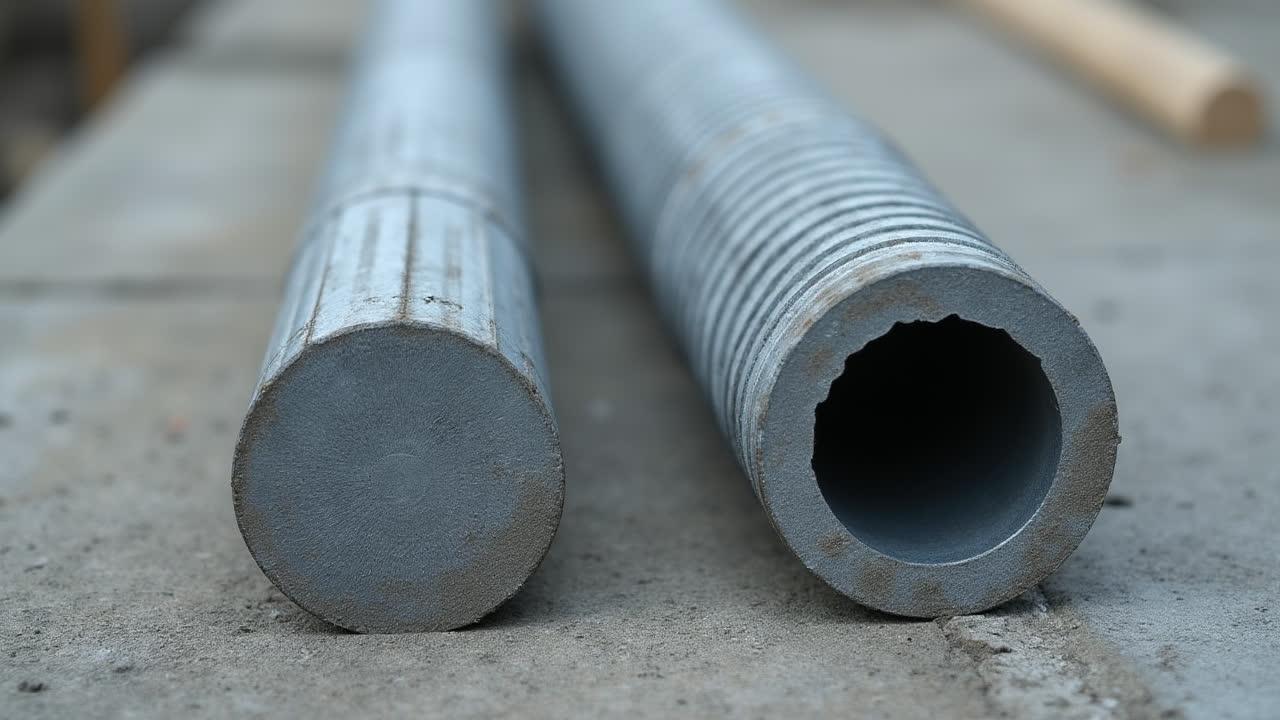
Plain bars are steel reinforcement rods with smooth, round surfaces without any ridges or patterns. Their simplicity defines both their strengths and limitations in construction applications. These bars represent one of the earliest forms of concrete reinforcement but continue to serve specific purposes in modern construction.
Working on smaller residential projects, I've often found plain bars to be perfect for certain applications where flexibility matters more than maximum strength. They're surprisingly versatile when used appropriately.
The smooth surface of plain bars means they form a relatively weak mechanical bond with surrounding concrete. Instead, they rely primarily on chemical adhesion and end anchorage (like hooks or bends) to prevent slippage. This characteristic makes them unsuitable for high-stress applications but ideal for situations requiring custom shapes or when welding is necessary.
Plain bars offer excellent workability, making them easy to bend into custom shapes like loops, spirals, or ties. Their smooth surface means less friction when threading through tight spaces or when multiple bars need to intersect. Additionally, plain bars typically cost less to produce due to their simpler manufacturing process, potentially reducing project costs for non-critical applications.
Key Applications of Plain Bars
- Spacers and positioning elements - Plain bars are excellent for creating spacers that maintain appropriate distances between primary reinforcement and formwork
- Dowels and joints - Their smooth surface is advantageous when creating expansion joints where some movement between concrete sections is desirable
- Lifting points - When bent into hooks, plain bars serve as lifting points for precast concrete elements
- Stirrups and ties - In some less critical applications, plain bars can be used for stirrups that hold primary reinforcement in place
- Non-structural elements - Gates, railings, and decorative elements often utilize plain bars
- Temporary supports - During construction, plain bars may serve as temporary supports or anchors
I recently worked on a heritage restoration project where we needed to match the original reinforcement techniques. Plain bars were historically accurate and provided just the right balance of strength and flexibility for the century-old structure we were preserving.
What Are Deformed Bars in Construction?
Unlike their smooth counterparts, deformed bars feature a textured surface with patterns of ribs, lugs, or indentations running along their length. These purposeful deformations represent a significant advancement in reinforcement technology, dramatically improving how steel and concrete work together.
The first time I witnessed a load test comparing plain and deformed bars, the difference was astonishing. The concrete reinforced with deformed bars handled nearly twice the load before showing signs of stress. It's not just an incremental improvement—it's a fundamental enhancement.
The distinctive feature of deformed bars is their enhanced mechanical bond with concrete. The ridges and deformations create interlocking points where concrete flows around the pattern and hardens, effectively "gripping" the bar from all sides. This mechanical bonding significantly reduces slippage under tension, allowing for much higher stress transfer between concrete and steel.
Modern deformed bars come in various patterns and grades, each designed for specific applications. Common patterns include crescent, spiral, and chevron deformations, while grades typically indicate tensile strength capabilities. Higher-grade deformed bars generally contain additional alloys that enhance their performance under extreme conditions.
The superior bonding of deformed bars means concrete structures can be designed with greater efficiency, often requiring less steel overall while achieving higher strength. This efficiency translates to potential cost savings despite the slightly higher per-unit cost of deformed bars compared to plain varieties.
Primary Applications of Deformed Bars
Deformed bars shine in applications where structural integrity and resistance to high stress are paramount. Their superior bonding capabilities make them the reinforcement of choice for:
- Beams and girders - Horizontal structural elements that carry loads across openings and between columns
- Columns and pillars - Vertical members that support compressive loads from upper floors or roof structures
- Foundation systems - Including footings, piles, and foundation walls that transfer building loads to the ground
- Slabs and decks - Horizontal surfaces that form floors, ceilings, bridges, and other platforms
- Retaining walls - Structures designed to hold back soil or water pressure
- Seismic reinforcement - Critical in earthquake-prone regions where structures must resist lateral forces
After working on a high-rise project in a seismic zone, I gained tremendous respect for properly implemented deformed bar reinforcement. During a minor earthquake during construction, the partially completed structure showed no signs of distress—a testament to the importance of proper reinforcement design.
Comprehensive Comparison: Plain Bars vs Deformed Bars
| Comparison Factor | Plain Bars | Deformed Bars |
|---|---|---|
| Surface Texture | Smooth and round surface | Ridged surface with lugs, ribs, or indentations |
| Bond Strength with Concrete | Relatively weak mechanical bond | Strong mechanical interlock with concrete |
| Tensile Strength | Lower tensile strength capacity | Higher tensile strength capacity |
| Slippage Risk | Higher risk of slippage under tension | Minimal slippage due to mechanical interlock |
| Workability | Excellent workability, easy to bend | Moderate workability, requires more force to bend |
| Cost | Generally lower production cost | Slightly higher production cost |
| Primary Applications | Non-structural, ties, spacers, dowels | Structural elements: beams, columns, slabs |
| Weldability | Better weldability characteristics | May have reduced weldability depending on grade |
Factors to Consider When Choosing Between Plain and Deformed Bars
Selecting the appropriate reinforcement type involves balancing several factors. Here's what construction professionals should consider:
The intended function of the concrete element is perhaps the most critical factor. Structural elements that bear significant loads almost always require deformed bars, while non-structural or auxiliary components might perform adequately with plain bars. Always consult structural engineering specifications for guidance.
Budget constraints inevitably influence material choices. While deformed bars cost more initially, they might prove more economical in the long run due to their superior performance and potentially reduced quantity requirements. Lifecycle cost analysis often reveals deformed bars to be the more cost-effective option for permanent structures.
Local building codes and standards typically specify minimum requirements for reinforcement in different applications. Many modern codes mandate deformed bars for primary structural elements but may permit plain bars in specific, limited applications. Always verify compliance with local regulations before proceeding.
I once consulted on a project where the contractor had substituted plain bars for specified deformed bars to cut costs. The building inspector caught this during a routine check, resulting in costly rework that far exceeded any initial savings. The lesson? Always follow engineering specifications and code requirements.
Common Misconceptions About Steel Reinforcement
Several myths persist about reinforcement bars that deserve clarification:
Misconception #1: More steel always means stronger concrete. In reality, proper spacing and placement matter as much as quantity. Overlapping too many bars can create "shadow zones" where concrete can't flow properly during pouring, potentially creating weak spots.
Misconception #2: All deformed bars are the same. Different deformation patterns and steel grades create significant performance variations. Always use the specific type called for in engineering specifications.
Misconception #3: Plain bars have no place in modern construction. While deformed bars dominate structural applications, plain bars remain valuable for specific uses like dowels, temporary supports, and ties.
Frequently Asked Questions About Plain and Deformed Bars
What makes deformed bars superior to plain bars for structural applications?
Deformed bars outperform plain bars in structural applications primarily due to their superior mechanical bond with concrete. The ridges, lugs, or indentations along their surface create interlocking points where concrete grips the bar, preventing slippage under tension. This mechanical interlock enables much higher stress transfer between concrete and steel, allowing structures to withstand greater loads without failure. Additionally, deformed bars typically have higher tensile strength ratings and better resistance to pullout forces, making them essential for elements that experience significant stress, such as beams, columns, and foundation systems.
When are plain bars the better choice over deformed bars?
Plain bars become the preferable option in several specific scenarios. They excel in applications requiring easy bending into complex shapes, such as creating ties, stirrups, or spacers that hold primary reinforcement in position. Their smooth surface makes them ideal for dowels in expansion joints where some movement between concrete sections is intentionally permitted. Plain bars also work well in non-structural elements like railings, gates, or decorative features. Additionally, their superior weldability makes them advantageous when multiple bars need to be connected through welding rather than overlapping or mechanical coupling.
How do building codes address the use of plain versus deformed bars?
Modern building codes generally mandate the use of deformed bars for primary structural elements due to their superior bonding capabilities and performance under stress. The American Concrete Institute (ACI) and International Building Code (IBC), along with similar codes worldwide, specify deformed bars for columns, beams, load-bearing walls, and foundations. Plain bars typically have limited approved uses in current codes, primarily for dowels, construction joints, and non-structural applications. Always consult the specific code version applicable to your jurisdiction, as requirements may vary regionally and evolve with updates to building standards.
Conclusion: Making the Right Choice for Your Project
The distinction between plain bars and deformed bars extends far beyond their appearance. Their fundamental differences in bonding capability, strength characteristics, and appropriate applications directly impact the integrity and longevity of concrete structures.
For critical structural elements that bear significant loads or must resist high stress, deformed bars represent the clear choice. Their superior mechanical bond with concrete creates stronger, more durable structures with better crack resistance and load distribution properties.
Plain bars, while limited in their structural applications, remain valuable for specific uses where their workability, flexibility, and economic advantages outweigh the need for maximum bond strength. Understanding when to use each type optimizes both safety and resource efficiency.
As construction technology advances, so too does reinforcement technology. Newer innovations like epoxy-coated, galvanized, and stainless steel reinforcement build upon the basic principles of deformed bars, offering enhanced corrosion resistance and longevity in aggressive environments.
Remember that proper reinforcement selection is just one aspect of successful concrete construction. Equally important are correct placement, adequate concrete cover, proper vibration during pouring, and appropriate curing conditions. When these factors align with suitable reinforcement choices, the result is a structure that will stand the test of time.