Lysosome vs Peroxisome: 7 Key Differences You Must Know
Lysosome vs Peroxisome: 7 Key Differences You Must Know
Have you ever wondered what really separates these tiny cellular powerhouses? Well, the lysosome vs peroxisome debate is more fascinating than you might think! As someone who spent way too much time staring at cell diagrams during my biology education, I can tell you that understanding these organelles isn't just for scientists – it's a window into the complex world living inside every single one of our cells.
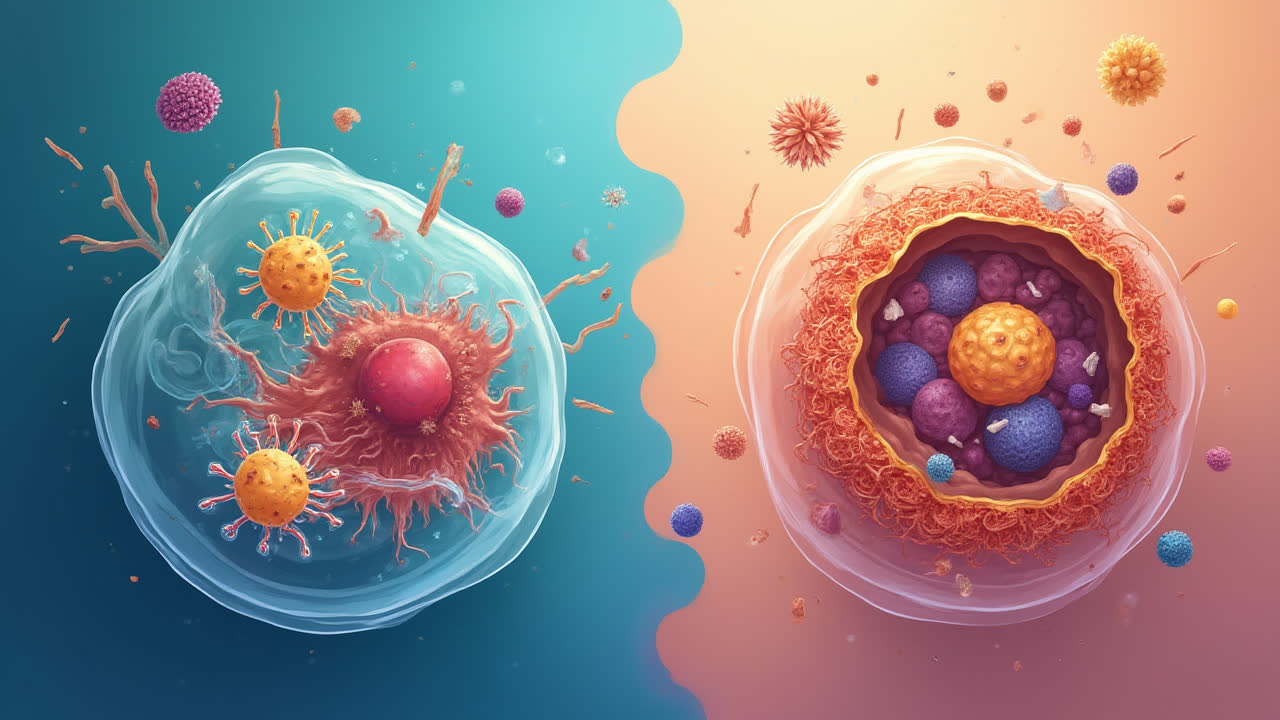
You know what's really cool? These microscopic structures have personalities as different as night and day. While lysosomes act like the cell's cleanup crew, peroxisomes are more like chemical engineers, doing the heavy lifting when it comes to breaking down stubborn molecules.
Let's dive into what makes each of these organelles unique. Trust me, once you get the hang of it, you'll never confuse them again (and you might even impress your friends at the next dinner party with your cellular knowledge).
Understanding the Basic Structure
First things first – let's talk size. If lysosomes were people at a party, they'd be the tall ones you notice right away, while peroxisomes would be more like those shorter folks who are just as important but maybe less obvious at first glance.
Here's something interesting: both organelles wrapped up in a single membrane, like tiny bubbles floating in your cell. But here's where things get quirky – lysosomes are typically about 0.1-1.2 µm in size, while peroxisomes keep it compact at 0.1-1.0 µm. Not much difference, but enough to matter!
I remember my professor explaining it this way: "Think of lysosomes as big trash compactors and peroxisomes as specialized recycling centers." Weird analogy, but it stuck!
The Enzyme Difference: What's Inside Matters
Okay, so what's really cooking inside these cellular containers? Lysosomes are packed with what scientists call "acid hydrolases" – fancy name for enzymes that love to work in acidic conditions. These little molecular scissors can cut up proteins, carbohydrates, lipids, and nucleic acids. It's like having a universal tool that can dismantle practically anything.
Meanwhile, peroxisomes are all about oxidation. They contain enzymes that add oxygen to organic compounds, creating hydrogen peroxide as a byproduct. Now here's the clever part – they also have catalase, an enzyme that breaks down that dangerous hydrogen peroxide into water and oxygen. It's like having a fire extinguisher right next to where you're playing with matches!
What amazes me is how evolution has created these specialized compartments to handle specific chemical reactions. Nature really thought of everything!
Location, Location, Location
Here's something that might surprise you: lysosomes are the animal kingdom's exclusive club. You won't find them in plants or fungi – they're strictly for us animal folks. But peroxisomes? They're like that friend who gets along with everyone, showing up in all eukaryotic cells, whether animal, plant, or fungal.
This difference always made me wonder – why do only animals need lysosomes? Maybe it's because we need that extra cellular housekeeping due to our complex lifestyles? Just a thought!
| Feature | Lysosome | Peroxisome |
|---|---|---|
| Size | 0.1-1.2 µm | 0.1-1.0 µm |
| Main Function | Breaks down biological polymers | Oxidizes organic compounds |
| pH Environment | Acidic (4.5-5.0) | Neutral |
| Found In | Animals only | All eukaryotes |
| Origin | Golgi apparatus/ER | ER, can self-replicate |
| Energy Generation | No | Yes (ATP) |
| Main Enzymes | Acid hydrolases | Oxidative enzymes |
| Signal Recognition | Mannose 6-phosphate | PTS (Peroxisomal Targeting Signal) |
pH Preferences: Acid vs. Neutral
If organelles went to a chemistry party, lysosomes would be ordering acidic drinks (pH 4.5-5.0) while peroxisomes prefer something neutral. This pH difference isn't just a preference – it's crucial for their function.
The acidic environment in lysosomes activates their digestive enzymes. But here's the clever safety feature: if these enzymes leak into the cytosol where the pH is 7.2, they become inactive. It's like having a security system that automatically shuts down if something goes wrong!
Peroxisomes, on the other hand, operate at the same pH as the cytosol. They don't need that acidic environment because their oxidative reactions work fine at neutral pH. Sometimes I think of them as the more laid-back cousins in the organelle family.
Origin Stories: Where Do They Come From?
Here's where things get really interesting! Lysosomes actually start their life journey in the rough endoplasmic reticulum (ER) where their enzymes are made. These proteins then travel to the Golgi apparatus, get packaged up with a special "mannose 6-phosphate" tag, and eventually bud off as mature lysosomes.
Peroxisomes have a more independent streak. They also originate from the ER, but here's the cool part – they can actually divide by themselves, like bacteria! They grow by importing proteins from the cytosol (tagged with special signals called PTS), and when they get big enough, they just split in two.
I always thought it was fascinating how these tiny organelles have such different life stories, despite being so similar in appearance. It really shows how complex cellular biology can be!
Functional Roles: Beyond Just Recycling
While both organelles handle cellular waste, their job descriptions are quite different. Lysosomes are like the ultimate cellular garbage disposals – they can break down worn-out organelles, engulfed bacteria, and various cellular debris through autophagy and phagocytosis.
Peroxisomes take on more specialized roles. They're involved in fatty acid metabolism (especially breaking down very long-chain fatty acids), cholesterol synthesis, and even helping with vitamin metabolism. In plant leaves, they play a crucial role in photorespiration, which is essentially cleaning up after photosynthesis.
What I find particularly interesting is how peroxisomes can actually generate ATP energy through their oxidative reactions, while lysosomes are purely catabolic and don't generate energy. It's like having one organelle that both produces and manages waste!
Disease Connections: When Things Go Wrong
Unfortunately, when these organelles malfunction, serious health issues can arise. Lysosomal storage diseases like Gaucher's disease and Tay-Sachs occur when specific lysosomal enzymes are missing or defective. The result? Unwanted substances accumulate in the cell, causing tissue damage and organ failure.
Peroxisomal disorders are equally serious. Zellweger syndrome, for instance, occurs when peroxisomes don't form properly, leading to severe developmental issues. These conditions really highlight how crucial these tiny organelles are for our health.
It's humbling to think that something so small can have such a huge impact on our wellbeing, isn't it?
The Takeaway
Understanding the lysosome vs peroxisome differences isn't just academic – it's about appreciating the incredible complexity and efficiency of our cells. These organelles, despite their similarities, have evolved to handle very specific tasks that keep our bodies functioning properly.
Next time someone asks you about cellular organelles, you can confidently explain that while lysosomes are the acidic demolition experts of the animal cell world, peroxisomes are the oxidative chemists found in all eukaryotes. Both are essential, both are fascinating, and both deserve our respect for the invisible work they do every second of every day!
Frequently Asked Questions
Are lysosomes and peroxisomes found in the same types of cells?
No, lysosomes are only found in animal cells, while peroxisomes are present in all eukaryotic cells including plants, animals, and fungi. This difference in distribution reflects their specialized functions and evolutionary origins.
What happens if lysosomes and peroxisomes don't function properly?
Lysosomal dysfunction can lead to storage diseases where unwanted substances accumulate in cells, causing tissue damage. Peroxisomal disorders can result in developmental problems and metabolic issues. Both can lead to serious health conditions requiring medical attention.
How do lysosomes and peroxisomes work together in cellular maintenance?
While they don't directly interact, lysosomes and peroxisomes complement each other in cellular maintenance. Peroxisomes break down certain molecules that lysosomes can't handle, while lysosomes process general cellular waste and debris. Together, they ensure efficient cellular recycling and metabolism.