How mRNA Molecules Transport DNA Information for Protein Synthesis
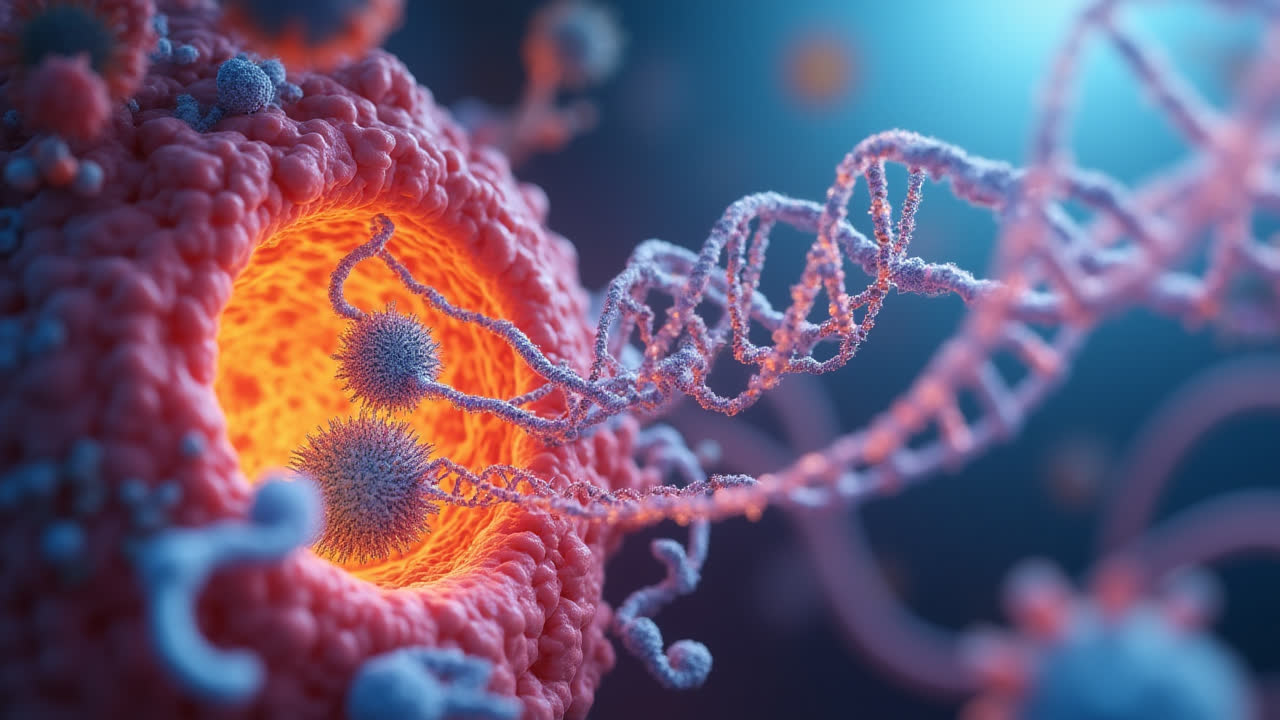
Have you ever wondered how your cells know what proteins to make and when to make them? The secret lies in a remarkable molecular messenger called mRNA. Messenger RNA (mRNA) serves as the crucial bridge between our genetic blueprint stored in DNA and the production of proteins that carry out essential functions in our bodies. This molecular messenger system is one of nature's most elegant solutions to a fundamental biological challenge.
When I first learned about this process in my biology classes, I was fascinated by how efficiently our cells handle this information transfer. It's like having a perfect copying system that ensures accurate protein production across billions of cells. In this article, we'll explore exactly how mRNA carries genetic information from DNA and why this process is fundamental to life as we know it.
Understanding mRNA: The Molecular Messenger
Before diving into how mRNA carries information, let's clarify what exactly mRNA is. Messenger RNA is a single-stranded molecule that carries genetic instructions from DNA in the nucleus to ribosomes in the cytoplasm, where proteins are synthesized. Unlike DNA, which typically remains safely housed in the nucleus, mRNA is mobile and transient, designed to deliver its message and then degrade.
The structure of mRNA is somewhat similar to DNA but with key differences. While DNA uses the nucleotide thymine (T), mRNA contains uracil (U) instead. Additionally, mRNA is single-stranded rather than the famous double helix structure of DNA. These differences are important for its function as a temporary messenger rather than a permanent storage molecule.
In eukaryotic cells (like human cells), mRNA has several distinctive features that help it fulfill its role. A mature eukaryotic mRNA molecule includes a 5' cap (a modified guanine nucleotide), a 5' untranslated region (UTR), a coding region that contains the instructions for the protein, a 3' UTR, and finally a poly-A tail consisting of multiple adenine nucleotides. Each of these components plays a vital role in ensuring the mRNA functions properly during protein synthesis.
I've always thought of mRNA as a bit like a courier service - picking up an important package (genetic information) from one location (the nucleus) and delivering it to another (the ribosomes) where it can be used. And just like any good delivery service, it has protective packaging (the 5' cap and poly-A tail) to ensure the message arrives intact!
The Journey Begins: Transcription
The process of creating mRNA from DNA information is called transcription. It's the first crucial step in gene expression, where the information in a gene is converted into a form that can leave the nucleus and direct protein synthesis. This process takes place inside the nucleus where our DNA is stored.
Transcription begins when an enzyme called RNA polymerase binds to a specific region of DNA called the promoter. Think of the promoter as a "start" sign that tells the RNA polymerase where to begin reading the DNA template. This binding is often facilitated by proteins called transcription factors, which help position the RNA polymerase correctly at the start of a gene.
Once properly positioned, the RNA polymerase unwinds a small portion of the DNA double helix, exposing the nucleotides of one strand. This exposed strand serves as the template for mRNA synthesis. The RNA polymerase reads this template strand in the 3' to 5' direction and synthesizes a complementary RNA strand in the 5' to 3' direction by adding RNA nucleotides that are complementary to the DNA template.
During this process, wherever there's an adenine (A) in the DNA template strand, the RNA polymerase adds a uracil (U) to the growing mRNA molecule. Similarly, guanine (G) pairs with cytosine (C), cytosine with guanine, and thymine (T) with adenine. This complementary base pairing ensures that the genetic information in DNA is accurately transcribed into mRNA.
I remember a professor once comparing transcription to making a photocopy of an important document - except in this case, the document is written in one language (DNA), and the copy is in a slightly different language (RNA) that can be read by the protein-making machinery outside the nucleus. It's an elegant solution to the problem of keeping your original document (DNA) safe while still being able to use the information it contains.
Eukaryotic mRNA Processing: Getting Ready for the Journey
In eukaryotic cells, the newly transcribed mRNA (called pre-mRNA) must undergo several modifications before it can leave the nucleus and be translated into protein. These modifications are collectively known as post-transcriptional processing, and they ensure that the mRNA is properly structured for its journey to the cytoplasm.
One of the most significant modifications is RNA splicing, where sections of the pre-mRNA called introns are removed, and the remaining sections (exons) are joined together. Introns are non-coding sequences that don't contain instructions for protein building, so they need to be removed to create a continuous coding sequence. This splicing process is performed by complexes of proteins and RNA called spliceosomes.
Another important modification is the addition of a 5' cap to the beginning of the mRNA molecule. This cap consists of a modified guanine nucleotide and serves several purposes: it protects the mRNA from degradation by enzymes, helps with the export of mRNA from the nucleus to the cytoplasm, and assists in the binding of ribosomes during translation.
At the other end of the mRNA, a poly-A tail (a string of adenine nucleotides) is added to the 3' end. Like the 5' cap, the poly-A tail helps protect the mRNA from degradation and plays a role in exporting the mRNA from the nucleus and in translation efficiency.
Sometimes I like to think of these modifications as preparing the message for a long journey. The 5' cap is like a hard protective case at the front, the poly-A tail is like a cushioned bumper at the back, and the splicing process is like editing out all the unnecessary parts of the message so only the essential information remains. All these preparations ensure the mRNA molecule is ready for its important job outside the nucleus.
Delivering the Message: Translation
Once the mRNA has been properly processed, it exits the nucleus through nuclear pores and enters the cytoplasm. Here, the second major step of protein synthesis occurs: translation. During translation, the nucleotide sequence of mRNA is decoded to produce a specific sequence of amino acids, which will fold to form a protein.
Translation takes place on ribosomes, which are complex molecular machines composed of ribosomal RNA (rRNA) and proteins. Ribosomes can be found floating freely in the cytoplasm or attached to the endoplasmic reticulum (rough ER). These remarkable structures serve as the workbenches where proteins are assembled.
The mRNA binds to the ribosome, and the ribosome reads the mRNA sequence in groups of three nucleotides called codons. Each codon specifies a particular amino acid or signals the start or end of protein synthesis. For example, the codon AUG codes for the amino acid methionine and also serves as the start codon, signaling the beginning of protein synthesis.
Another type of RNA, called transfer RNA (tRNA), helps in the translation process. Each tRNA molecule carries a specific amino acid and has an anticodon that can base-pair with a codon on the mRNA. When a tRNA's anticodon matches the codon being read by the ribosome, the amino acid it carries is added to the growing protein chain.
This process continues, with the ribosome moving along the mRNA, reading each codon and adding the appropriate amino acid to the growing protein chain until it reaches a stop codon (UAA, UAG, or UGA). At this point, protein synthesis is terminated, and the completed protein is released from the ribosome.
Comparison of DNA and mRNA
| Characteristic | DNA | mRNA |
|---|---|---|
| Structure | Double-stranded helix | Single-stranded molecule |
| Sugar component | Deoxyribose | Ribose |
| Nucleotides | A, T, G, C | A, U, G, C |
| Location | Primarily in nucleus | Synthesized in nucleus, functions in cytoplasm |
| Stability | Very stable (long-term storage) | Relatively unstable (temporary messenger) |
| Function | Storage of genetic information | Transfer of genetic information for protein synthesis |
| Lifespan | Lasts for the life of the cell | Short-lived (minutes to hours) |
| Special features | Contains introns and exons in eukaryotes | Contains 5' cap, poly-A tail in eukaryotes |
Frequently Asked Questions
Why can't DNA directly participate in protein synthesis?
DNA cannot directly participate in protein synthesis for several important reasons. First, DNA is confined to the nucleus in eukaryotic cells, while protein synthesis occurs in the cytoplasm. This compartmentalization prevents direct use of DNA during translation. Second, DNA serves as the master blueprint that must be protected from damage, so using temporary copies (mRNA) preserves the integrity of the original genetic information. Third, using mRNA as an intermediate allows for regulation of gene expression through various mechanisms like RNA processing, which wouldn't be possible if proteins were made directly from DNA.
How do mRNA vaccines like those for COVID-19 work?
mRNA vaccines utilize the body's own protein-making machinery to produce an immune response. These vaccines contain laboratory-made mRNA that carries instructions for making a specific protein (or piece of a protein) from the targeted pathogen—such as the spike protein of the SARS-CoV-2 virus. Once injected, this mRNA enters cells and instructs them to produce the viral protein. The cells then display this protein on their surface, triggering an immune response. The body recognizes these proteins as foreign and develops antibodies against them, creating immunity without exposure to the actual virus. The mRNA itself doesn't integrate into our DNA and degrades naturally after a short time.
What happens to mRNA after it has delivered its message?
After mRNA has delivered its message and been translated into protein, it undergoes degradation as part of normal cellular processes. This degradation is carried out by enzymes called ribonucleases (RNases) that break down the mRNA into its component nucleotides. The lifespan of mRNA varies considerably—from minutes to days—depending on the specific mRNA and cell type. This temporary nature of mRNA is crucial for cellular function, as it allows cells to quickly adjust protein production in response to changing conditions. The degradation process typically begins with removal of the poly-A tail, followed by decapping and then digestion of the mRNA body. The released nucleotides can then be recycled for the synthesis of new RNA molecules.
Conclusion: The Remarkable Role of mRNA
The journey of genetic information from DNA to protein, with mRNA as the crucial intermediary, represents one of the most fundamental processes in biology. Through transcription, RNA processing, and translation, cells ensure that the instructions encoded in our genes are faithfully converted into the proteins that carry out virtually all cellular functions.
The transient nature of mRNA provides cells with tremendous flexibility in gene expression, allowing for rapid responses to changing conditions. This characteristic has not only been essential for natural biological processes but has also been harnessed for medical advancements, most notably in the development of mRNA vaccines.
Understanding how mRNA carries information from DNA gives us insight into the elegant solutions that have evolved over billions of years to solve the complex problem of accurate protein synthesis. It's a reminder of the intricate molecular mechanisms that operate within our cells every moment of every day, largely unnoticed but absolutely essential for life.
The next time you take a moment to marvel at the complexity of living organisms, remember the humble mRNA molecule—a temporary messenger that plays a permanent role in making life possible.