Epoxy vs Urethane: Which Polymer Is Right For Your Project?
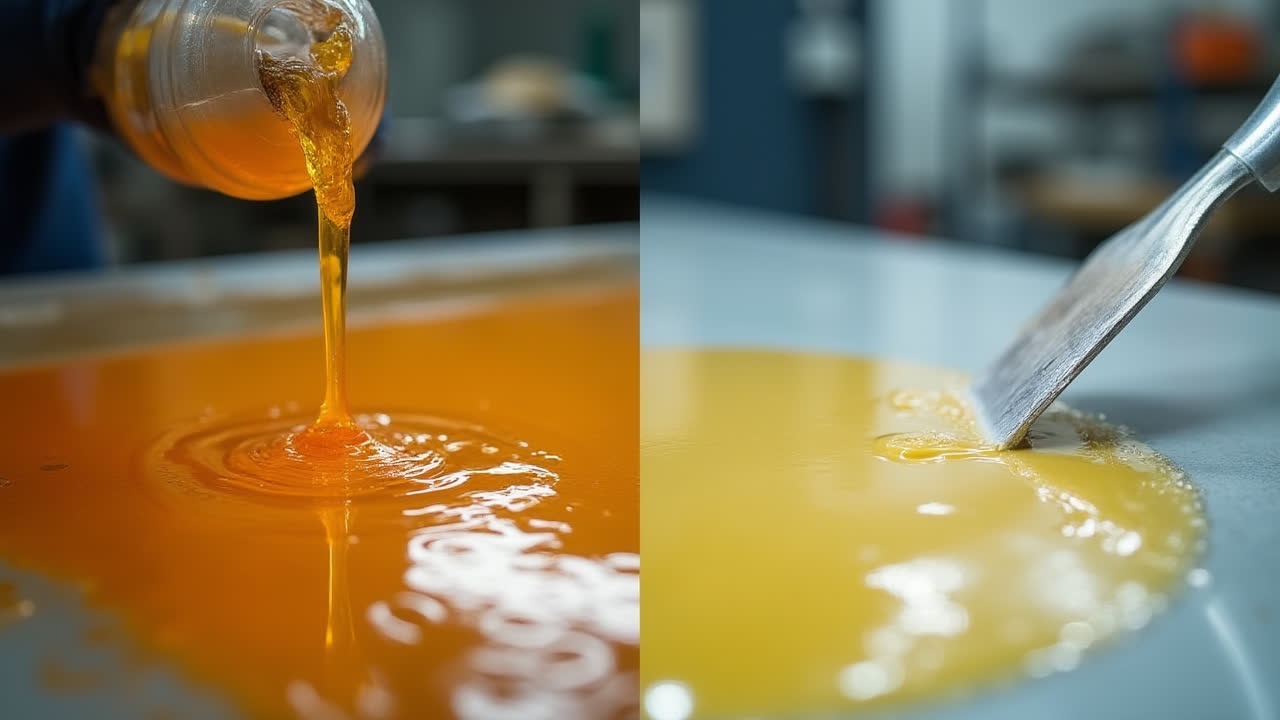
When it comes to industrial coatings, adhesives, and sealants, two materials often come up in conversation: epoxy and urethane. While they might seem similar at first glance, these versatile polymers have distinct properties that make each better suited for specific applications. Have you ever wondered which one would work best for your project? I certainly have, and after years of working with both materials, I've learned there's no one-size-fits-all answer.
The main difference between epoxy and urethane is their fundamental chemical structure. Epoxy resins are thermosetting polymers consisting of epoxide functional groups, while urethane is a thermoplastic or thermosetting polymer composed of urethane links (also called carbamate groups). This distinction might sound technical, but it leads to significant differences in flexibility, durability, and application methods that can make or break your project's success.
I've seen countless DIY enthusiasts and even professionals choose the wrong material simply because they didn't understand these key differences. In this comprehensive guide, I'll break down everything you need to know about epoxy and urethane to help you make an informed decision. We'll explore their unique properties, common applications, and even tackle those tricky questions like which one lasts longer or performs better in specific environments.
Understanding Epoxy: Properties and Applications
Epoxy resins belong to the class of thermosetting polymers and are derived from organic compounds known as epoxides. These materials contain a characteristic three-membered ring structure with an oxygen atom that's highly reactive with various chemicals. When I first started working with epoxies, I was amazed by their incredible bonding strength and versatility across different surfaces.
The production of epoxy typically involves the reaction of epichlorohydrin with bisphenol-A or similar compounds. This chemical dance creates a chain-like polymer with repeating units containing epoxy groups. The magic happens during the curing process, which requires adding a hardener (usually an amine). This reaction forms a three-dimensional, cross-linked network that gives epoxy its remarkable properties. I've found that understanding this curing process is crucial for achieving optimal results in any epoxy application.
One thing I've always appreciated about epoxy is its exceptional adhesion to nearly any surface. Whether you're working with metal, concrete, wood, or composites, epoxy creates a bond that's often stronger than the materials themselves. This adhesive power makes it an ideal choice for structural bonding in construction, automotive, and aerospace industries. I once repaired a boat hull with epoxy that had been damaged after hitting a submerged rock, and years later, that repair remains as solid as the day it was applied.
Beyond its adhesive qualities, epoxy excels as a protective coating. Its resistance to chemicals, corrosion, and wear makes it perfect for industrial flooring, marine applications, and anywhere that needs serious protection from harsh environments. I've seen epoxy floors in manufacturing facilities that have withstood decades of heavy machinery traffic, chemical spills, and daily abuse while still maintaining their integrity and appearance.
The electronics industry heavily relies on epoxy for encapsulating components, providing electrical insulation, and protecting sensitive parts from environmental factors. This wide range of applications demonstrates why epoxy has become such a fundamental material across so many industries. However, it's worth noting that traditional epoxies do have limitations – they can be brittle when fully cured and may yellow over time when exposed to UV light, something I've observed firsthand on outdoor applications left unprotected by a UV-resistant topcoat.
Diving Into Urethane: Characteristics and Uses
Urethane, often referred to as polyurethane, offers a different set of properties that complement epoxy's strengths while addressing some of its limitations. The defining feature of urethane is its chemical structure, characterized by urethane linkages (carbamate groups) formed by the reaction between isocyanates and polyols. Unlike my early experiences with epoxy, which impressed me with its rigidity and strength, urethane captivated me with its remarkable flexibility and resilience.
What makes urethane truly special is its versatility. By adjusting the types of isocyanates and polyols used in the formulation, manufacturers can create materials ranging from super soft foams to rock-hard plastics. This adaptability makes urethane suitable for an incredible variety of applications. I remember working on a project where we needed a material that could withstand repeated flexing while maintaining its integrity – urethane was the obvious choice, and it performed flawlessly.
In the coating industry, urethanes shine for their exceptional resistance to abrasion, chemicals, and UV exposure. Unlike epoxies, which often require a separate UV-resistant topcoat for exterior applications, many urethane formulations inherently resist yellowing and degradation from sunlight. This property makes them ideal for automotive finishes, marine applications, and outdoor equipment. I've applied urethane coatings to surfaces that have been exposed to harsh weather conditions for years without showing significant signs of deterioration.
The foam varieties of urethane deserve special mention for their incredible versatility. From rigid insulation foams that keep our homes energy-efficient to the soft, flexible foams in our mattresses and car seats, urethane foams have become ubiquitous in modern life. I once renovated an old cabin using spray foam insulation, and the difference in comfort and energy efficiency was remarkable – a testament to urethane's excellent insulative properties.
Where urethane really outperforms epoxy is in applications requiring flexibility, impact resistance, and vibration dampening. This makes it the preferred choice for automotive parts like bushings and suspension components, as well as industrial wheels and rollers. The material's ability to absorb shock and return to its original shape has saved many pieces of equipment from premature failure. In one manufacturing facility I consulted for, switching from hard plastic to urethane rollers significantly reduced noise levels and increased the lifespan of their conveyor system.
Epoxy vs Urethane: Head-to-Head Comparison
| Property | Epoxy | Urethane |
|---|---|---|
| Chemical Composition | Thermosetting polymer with epoxide functional groups | Polymer composed of urethane links (carbamate groups) |
| Flexibility | Rigid with little flexibility, potentially brittle | Highly flexible and resilient, available in various hardness levels |
| Hardness | Generally harder and more rigid | Variable, from very soft to hard depending on formulation |
| UV Resistance | Poor - tends to yellow and degrade with UV exposure | Good to excellent depending on formulation |
| Chemical Resistance | Excellent resistance to most chemicals | Good resistance, but may be affected by strong solvents |
| Abrasion Resistance | Good, but can chip if impacted | Excellent, absorbs impact better than epoxy |
| Cost | Generally less expensive | Typically more expensive than epoxy |
| Curing Time | Usually longer cure times (24-72 hours for full cure) | Often quicker cure times (especially for moisture-cured versions) |
Choosing Between Epoxy and Urethane: Application Considerations
Selecting the right material for your project comes down to understanding the specific requirements and environmental conditions. Based on my experience working with both materials across various industries, I've developed some practical guidelines to help you make the best choice.
For high-strength bonding applications where rigidity is beneficial, epoxy is typically the superior option. Its exceptional adhesion to most surfaces and resistance to chemicals make it perfect for structural applications. I've used epoxy extensively for concrete repairs, metal fabrication, and marine applications where strength is non-negotiable. That said, if your bonded joint needs to flex or absorb vibration, urethane adhesives would be the better choice despite their generally lower bonding strength compared to epoxies.
When it comes to floor coatings, the decision becomes more nuanced. Epoxy flooring excels in environments that face chemical exposure but minimal impact or temperature fluctuations. I've installed epoxy floors in laboratories, garages, and industrial settings where its chemical resistance and hard-wearing properties are invaluable. However, for areas with heavy foot traffic, frequent impacts, or outdoor exposure, urethane coatings often provide better long-term performance due to their superior flexibility and UV resistance.
Weather exposure is another critical factor in your material selection. For outdoor projects, urethane generally outperforms epoxy thanks to its natural resistance to UV degradation. I learned this lesson the hard way after coating an outdoor table with standard epoxy – within a year, it had yellowed significantly and developed small cracks. A similar project using urethane maintained its clarity and integrity for several years despite constant sun exposure.
- Choose epoxy when: You need maximum adhesion strength, chemical resistance, and hardness, and when the application is indoors or protected from UV exposure.
- Choose urethane when: Flexibility, impact resistance, UV stability, and abrasion resistance are priorities, or when the material needs to withstand vibration and movement.
Temperature extremes present another consideration. Epoxy tends to become brittle in very cold environments, while certain urethanes can maintain flexibility even in sub-freezing temperatures. Conversely, some high-performance epoxies offer better heat resistance than standard urethanes. I once consulted on an industrial project in northern Minnesota where urethane was selected specifically for its cold temperature performance, while a similar project in Arizona opted for high-heat resistant epoxy formulations.
Emerging Trends and Hybrid Solutions
The distinction between epoxy and urethane isn't always black and white. Manufacturers are increasingly developing hybrid formulations that combine the best properties of both materials. These innovative products aim to offer the adhesion strength and chemical resistance of epoxy along with the flexibility and UV stability of urethane.
One emerging trend I've been excited to see is the development of water-based epoxy and urethane products with lower VOC (Volatile Organic Compound) emissions. These environmentally friendly alternatives are becoming increasingly popular as regulations tighten and consumers demand more sustainable options. I recently used a water-based urethane floor coating in a residential project, and the performance was comparable to traditional solvent-based products while being much less odorous during application.
Another fascinating development is the creation of "epoxy-modified urethanes" or "urethane-modified epoxies" that truly blur the line between these two materials. These hybrids are engineered to provide enhanced performance in specific applications, such as floor coatings that offer better flexibility than traditional epoxy but greater chemical resistance than standard urethane. During a recent commercial kitchen renovation, we selected a urethane-modified epoxy floor coating specifically for its ability to withstand thermal shock (rapid temperature changes) while maintaining excellent chemical resistance against food acids and cleaning agents.
Advances in curing technology have also led to faster-curing formulations of both materials, addressing one of the traditional drawbacks of these systems. Rapid-cure epoxies and urethanes now allow for quicker project completion and reduced downtime in commercial and industrial settings. This innovation has been particularly valuable in time-sensitive projects – I recall one retail floor installation where we were able to apply the coating after hours and have the store ready for business the next morning thanks to these fast-curing technologies.
Frequently Asked Questions
What is harder, epoxy or urethane?
Epoxy is generally harder and more rigid than urethane. While epoxies typically cure to form a very hard, inflexible surface with excellent compressive strength, urethanes can be formulated across a wide spectrum of hardness levels. This fundamental difference makes epoxy better suited for applications requiring maximum hardness and rigidity, while urethane's variable hardness makes it more versatile across different applications. However, hardness doesn't always equate to better performance – urethane's ability to flex and absorb impact often provides superior long-term durability in applications with movement or vibration.
Which is more expensive, epoxy or urethane?
Urethane is typically more expensive than epoxy for comparable products. This price difference reflects urethane's more complex chemistry and manufacturing process, as well as its enhanced performance characteristics in areas like flexibility, UV resistance, and impact absorption. However, the price difference varies significantly based on the specific formulation, quality, and intended application. When calculating costs, it's important to consider not just the initial material expense but also the long-term performance benefits. In many cases, urethane's superior durability in certain applications can provide better value over time despite the higher upfront cost.
What are the two types of urethane?
The two primary types of urethane are polyether urethane and polyester urethane. Polyether urethane is known for its excellent moisture resistance, making it ideal for applications exposed to water or high humidity. It maintains its flexibility better in wet conditions and has superior hydrolytic stability, which prevents breakdown from water exposure. Polyester urethane, on the other hand, offers better durability and wear resistance in dry environments. It typically provides superior resistance to oils, solvents, and abrasion, making it preferable for applications like industrial rollers and mechanical parts that need to withstand heavy wear and tear.
Conclusion: Making the Right Choice for Your Project
The choice between epoxy and urethane ultimately depends on your specific application requirements. Both materials offer impressive performance characteristics that have established them as staples in industries ranging from construction to electronics, automotive to marine applications. Understanding their fundamental differences in flexibility, chemical resistance, UV stability, and impact absorption is key to selecting the right material for your needs.
For projects demanding maximum adhesion strength, hardness, and chemical resistance in protected environments, epoxy continues to be the go-to solution. Its unparalleled bonding capabilities and resistance to a wide range of chemicals make it indispensable for structural applications and harsh industrial environments. However, when flexibility, weather resistance, and impact absorption are priorities, urethane often provides superior performance and longevity despite its typically higher cost.
As technology advances, the line between these materials continues to blur with hybrid formulations offering the best properties of both. These innovations are expanding the possibilities for both professionals and DIY enthusiasts alike. Whether you're coating a garage floor, bonding dissimilar materials, or creating custom parts, there's likely an epoxy or urethane product—or a hybrid of the two—perfectly suited to your application.
The next time you're standing in the aisle trying to decide between epoxy and urethane, remember that neither is universally "better" than the other. Instead, consider your project's specific requirements, environmental conditions, and performance needs. With the information provided in this guide, you're now equipped to make an informed decision that will ensure the success and longevity of your project.

Related Posts