How DNA Polymerase Powers Genetic Replication: The Complete Guide
How DNA Polymerase Powers Genetic Replication: The Complete Guide
Understanding the Master Architect of Genetic Replication
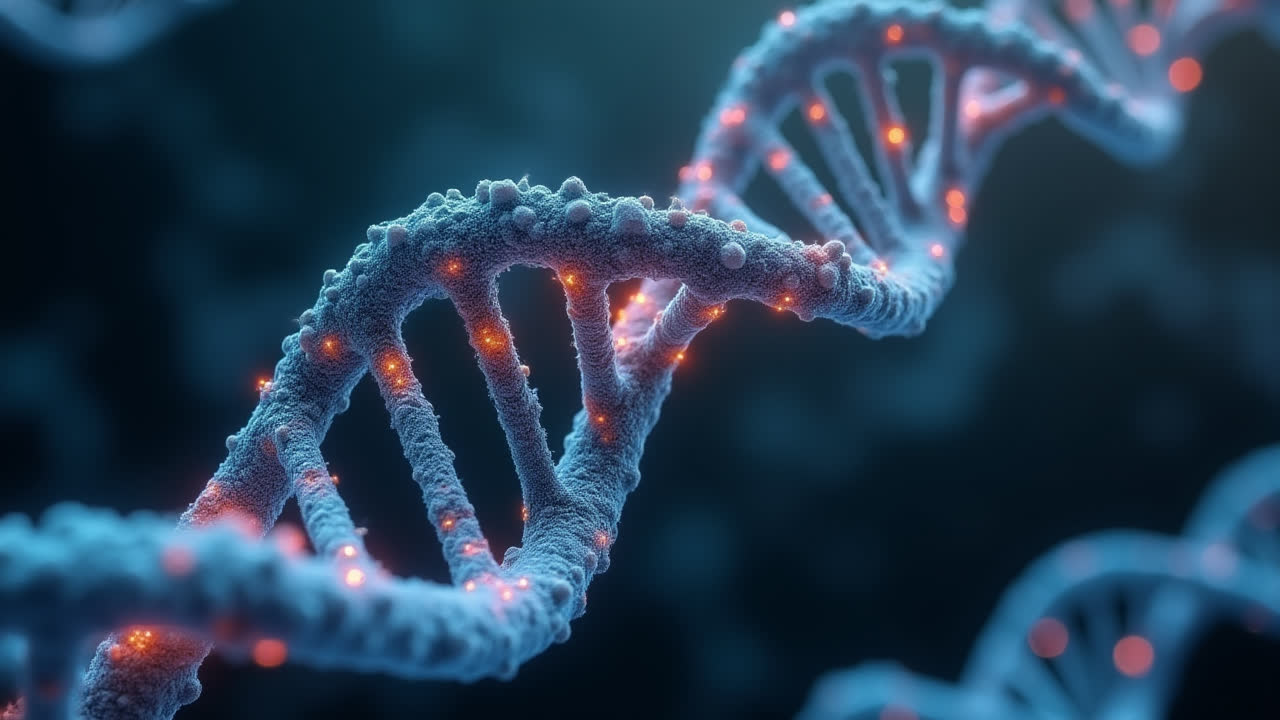
At the heart of every cell's ability to reproduce lies a remarkable enzyme called DNA polymerase. This molecular machine serves as the master architect of genetic replication, meticulously building new DNA molecules that carry the blueprint for everything from your eye color to your susceptibility to certain diseases. Without this enzyme, life as we know it would be impossible, as cells would be unable to divide and organisms could not reproduce.
DNA polymerase doesn't just hastily slap together genetic material—it works with extraordinary precision, adding nucleotides (the building blocks of DNA) one by one to create an exact copy of the existing DNA strand. The enzyme reads the genetic code from the template strand and assembles a complementary sequence with remarkable accuracy, making only about one mistake per billion nucleotides added. That's like typing the entire Harry Potter series 10 times with just a single typo!
I've always been fascinated by how this tiny molecular machine can work with such incredible precision. When I first learned about DNA polymerase in my biochemistry class, I remember thinking that it's like having a proofreader, editor, and writer all wrapped up in one microscopic package. It's not just building DNA—it's ensuring the integrity of the genetic information that makes you uniquely you.
In this comprehensive guide, we'll explore the fascinating world of DNA polymerase and its critical role in DNA replication. Whether you're a student trying to understand the basics or someone with a curious mind wanting to delve deeper into the molecular processes that make life possible, this article will provide you with a thorough understanding of this essential enzyme.
What Exactly Is DNA Polymerase?
DNA polymerase is an enzyme that catalyzes the synthesis of DNA molecules from nucleotide building blocks. Think of it as a molecular construction worker that assembles a new DNA strand by reading an existing template strand and adding complementary nucleotides to build the partner strand. But unlike construction workers who might occasionally place a brick incorrectly, DNA polymerase has built-in quality control mechanisms to ensure near-perfect accuracy.
This enzyme doesn't work alone—it's part of a complex molecular machinery that includes various proteins and enzymes, all working together in a highly coordinated process. There are actually several types of DNA polymerases found in different organisms, each with specific functions and characteristics. In prokaryotes (bacteria and archaea), DNA polymerases are designated by Roman numerals (I, II, III, IV, and V), while in eukaryotes (animals, plants, fungi), they're named using Greek letters (α, β, γ, δ, ε, etc.).
DNA Polymerase I and III perform most of the DNA replication work in prokaryotes, with Polymerase III being the primary replicative enzyme. In eukaryotes, DNA Polymerases α, δ, and ε are the main players in nuclear DNA replication. Interestingly, DNA Polymerase γ is specifically responsible for replicating mitochondrial DNA, highlighting the specialized nature of these enzymes.
Have you ever wondered why we have so many different types of DNA polymerases? I used to think one would be enough, but it turns out that each type has evolved to handle specific aspects of DNA synthesis and repair. Some are built for speed, others for accuracy, and still others for specialized repair functions—it's like having different tools in a toolbox, each designed for a specific job.
The Crucial Role of DNA Polymerase in DNA Replication
DNA replication is an incredibly complex and precisely orchestrated process that ensures the accurate duplication of genetic material before cell division. During this process, DNA polymerase plays several critical roles that maintain both the efficiency and fidelity of replication.
When a cell prepares to divide, the DNA double helix unwinds, creating what scientists call a replication fork. At this fork, DNA polymerase gets to work, but it faces an immediate challenge: it can only add nucleotides in the 5' to 3' direction. Since the two strands of DNA run in opposite directions (they're antiparallel), the replication process is slightly different for each strand.
On the leading strand, DNA polymerase works continuously, adding nucleotides in a smooth, uninterrupted fashion. However, on the lagging strand, it must work discontinuously, creating short fragments (called Okazaki fragments) that are later joined together by another enzyme called DNA ligase. This asymmetric replication is one of the fascinating quirks of molecular biology that highlights the complexity of the process.
Another interesting aspect is that DNA polymerase cannot start synthesizing a new DNA strand from scratch—it needs a primer, a short sequence of RNA nucleotides created by another enzyme called primase. Once the primer is in place, DNA polymerase can take over and extend the DNA strand. This dependency on a primer is why primase is often called the "starter motor" of DNA replication.
I remember struggling with this concept in college until my professor used an analogy that made it click: DNA polymerase is like a train that can only add cars to an existing train—it can't start a new train line without having some initial cars (the primer) already in place. These little mental models have really helped me appreciate the elegant solutions that evolution has developed for complex biological problems.
DNA Polymerase's Proofreading Mechanism: Nature's Quality Control
Perhaps the most remarkable feature of DNA polymerase is its built-in proofreading capability. Imagine writing a 1000-page novel with only a single typo—that's the level of accuracy DNA polymerase achieves, and it does so through a sophisticated error-checking mechanism.
When DNA polymerase adds a nucleotide to the growing DNA strand, it doesn't just blindly attach any nucleotide that comes along. It carefully selects the correct complementary nucleotide based on the template strand: adenine (A) pairs with thymine (T), and guanine (G) pairs with cytosine (C). Before forming the chemical bond that permanently adds the nucleotide, the enzyme performs a quick check to ensure the correct base pairing.
But what happens if a mistake does occur? This is where the truly impressive aspect of DNA polymerase comes into play: its 3' to 5' exonuclease activity. If an incorrect nucleotide is added, the enzyme can actually reverse direction, remove the incorrect nucleotide, and then continue forward again with the correct one. It's like having an eraser attached to your pencil that automatically detects and corrects mistakes as you write.
This proofreading function is crucial for maintaining the integrity of genetic information. Without it, mutations would accumulate at a much higher rate, potentially leading to cellular dysfunction, cancer, or other genetic disorders. The proofreading capability reduces the error rate from about 1 in 100,000 to approximately 1 in 10,000,000, representing a 100-fold improvement in accuracy.
When I think about this molecular proofreading mechanism, I can't help but be amazed by its efficiency. In my own writing, I often make typos that I don't catch until the third or fourth review, yet this tiny enzyme manages to catch and correct errors almost immediately. It's a humbling reminder of the sophistication of biological systems that have been refined through billions of years of evolution.
| Characteristic | Prokaryotic DNA Polymerases | Eukaryotic DNA Polymerases |
|---|---|---|
| Naming Convention | Roman numerals (I, II, III, IV, V) | Greek letters (α, β, γ, δ, ε, etc.) |
| Primary Replicative Enzyme | DNA Polymerase III | DNA Polymerases δ and ε |
| Size and Complexity | Generally smaller, simpler | Larger, more complex with multiple subunits |
| Speed (nucleotides/second) | 1000 | 50-100 |
| Processivity (nucleotides added before dissociation) | High (thousands) | Lower (hundreds) |
| Proofreading Capability | Present in Pol I and Pol III | Present in Pol δ, ε, and γ |
| Special Functions | Pol I removes RNA primers | Specialized polymerases for DNA repair |
| Location of Activity | Cytoplasm (no nucleus) | Nucleus and organelles (mitochondria) |
DNA Polymerase in Different Organisms: Evolution's Variations
The fascinating aspect of DNA polymerase is how it has evolved across different domains of life while maintaining its core function. Although the fundamental mechanism of DNA replication is conserved, the specific enzymes involved show remarkable diversity across species, reflecting billions of years of evolutionary adaptation.
In prokaryotes like bacteria, DNA polymerase operates in a relatively straightforward environment. The bacterial chromosome is circular and doesn't have the complex packaging found in eukaryotic cells. As mentioned earlier, prokaryotes primarily rely on DNA Polymerases I and III, with Pol III doing most of the heavy lifting during replication. These enzymes work at impressive speeds, adding about 1000 nucleotides per second—quite a feat considering the precision required!
Eukaryotic cells, with their larger genomes and complex nuclear organization, employ a more sophisticated replication machinery. They use multiple DNA polymerases with specialized functions. DNA Polymerase α initiates replication by synthesizing short RNA-DNA primers. DNA Polymerases δ and ε then take over, with δ primarily working on the lagging strand and ε on the leading strand. Eukaryotic polymerases are generally slower than their prokaryotic counterparts, adding only about 50-100 nucleotides per second, but they compensate by initiating replication at multiple origins simultaneously.
Viruses represent another interesting case. Some viruses, particularly retroviruses like HIV, use a special form of polymerase called reverse transcriptase, which synthesizes DNA from an RNA template—the reverse of the normal process. This unique ability has not only been crucial for viral reproduction but has also been harnessed by scientists for techniques like reverse transcription PCR (RT-PCR), which became a household term during the COVID-19 pandemic.
When I think about the diversity of DNA polymerases across different forms of life, I'm reminded of how evolution finds different solutions to the same problem. It's like seeing different automotive manufacturers develop their own unique engine designs—they all achieve the same basic function (powering a vehicle) but with variations that reflect different priorities and constraints. Nature's engineering is truly remarkable in its creativity and adaptability.
The Medical Significance of DNA Polymerase
Understanding DNA polymerase isn't just an academic exercise—it has profound implications for medicine and biotechnology. Mutations in genes encoding DNA polymerases can lead to various disorders, highlighting the enzyme's importance in maintaining genetic stability.
One notable example is Xeroderma pigmentosum, a rare genetic disorder where individuals are extremely sensitive to ultraviolet radiation from sunlight. This condition is often caused by mutations in genes involved in DNA repair, including those encoding specialized DNA polymerases that participate in repairing UV-induced DNA damage. People with this condition have a much higher risk of developing skin cancer and must take extreme precautions to avoid sun exposure.
DNA polymerases are also crucial targets for cancer research. Cancer cells often have dysregulated DNA replication and repair mechanisms, leading to genomic instability—a hallmark of cancer. Some cancer treatments specifically target DNA polymerases or associated replication machinery to selectively kill rapidly dividing cancer cells. Understanding the nuances of DNA polymerase function has been instrumental in developing these targeted therapies.
In the realm of biotechnology, DNA polymerases have revolutionized molecular biology through their application in techniques like the polymerase chain reaction (PCR). PCR uses heat-stable DNA polymerases (often isolated from thermophilic bacteria like Thermus aquaticus) to amplify specific DNA sequences, enabling everything from COVID-19 testing to forensic DNA analysis and genetic research. Without these specialized polymerases, many modern medical diagnostic tools and research techniques would be impossible.
I've seen firsthand how PCR has transformed medical diagnostics. During a laboratory internship, I observed how quickly we could detect genetic mutations associated with certain diseases using PCR-based techniques. What once would have taken weeks of painstaking work can now be done in hours, all thanks to our understanding and utilization of DNA polymerases. It's a powerful example of how basic research into cellular processes can translate into practical applications that benefit society.
Frequently Asked Questions About DNA Polymerase
Why can't DNA polymerase start DNA synthesis from scratch?
DNA polymerase requires a free 3'-OH group to add nucleotides during DNA synthesis, and it can't create this starting point on its own. This is why primase is necessary to create an RNA primer with a free 3'-OH end. This limitation is actually a safeguard mechanism that prevents random DNA synthesis throughout the genome, ensuring that replication only occurs at designated origins and during appropriate cell cycle phases. Without this requirement, random DNA synthesis could lead to genomic instability and potentially harmful mutations.
How do errors in DNA polymerase function contribute to cancer development?
Errors in DNA polymerase function can significantly contribute to cancer development through several mechanisms. When DNA polymerases lack proper proofreading capabilities or when genes encoding these enzymes are mutated, it leads to increased mutation rates throughout the genome. These mutations can affect proto-oncogenes (converting them to active oncogenes) or tumor suppressor genes, disrupting normal cell growth regulation. Some cancer-prone syndromes are directly linked to mutations in polymerase genes, particularly in the proofreading domains. For example, mutations in the proofreading domains of DNA polymerases δ and ε are associated with colorectal and endometrial cancers with extraordinarily high mutation rates, a condition known as polymerase proofreading-associated polyposis (PPAP).
How have thermostable DNA polymerases revolutionized biotechnology?
Thermostable DNA polymerases, primarily isolated from heat-loving bacteria like Thermus aquaticus (which produces Taq polymerase), have revolutionized biotechnology by enabling the polymerase chain reaction (PCR). Before thermostable polymerases, researchers had to add fresh polymerase after each heating cycle in PCR, making the process incredibly labor-intensive and inefficient. Thermostable polymerases remain active through multiple heating cycles (up to 95°C), allowing for automated, rapid DNA amplification. This breakthrough has made possible numerous applications including genetic testing, disease diagnosis, forensic DNA analysis, cloning, and next-generation sequencing. During the COVID-19 pandemic, thermostable polymerases were essential for RT-PCR tests that detected the SARS-CoV-2 virus. Beyond PCR, these enzymes are crucial for many other molecular biology techniques, including DNA sequencing, site-directed mutagenesis, and synthetic biology applications.
Conclusion: The Continuing Journey of DNA Polymerase Research
As our understanding of DNA polymerase continues to evolve, so too does our appreciation for this remarkable enzyme's role in maintaining life's genetic blueprint. From its basic function in DNA replication to its applications in cutting-edge biotechnology, DNA polymerase exemplifies the intricate and elegant solutions that have emerged through billions of years of evolution.
Research into DNA polymerase is far from complete. Scientists are still uncovering new details about how these enzymes function, how they interact with other components of the replication machinery, and how their dysfunction contributes to disease. Advances in structural biology have provided unprecedented views of DNA polymerases in action, while new techniques in single-molecule studies are revealing the dynamics of these enzymes at the molecular level.
The practical applications of DNA polymerase research continue to expand. From more sensitive diagnostic tests to potential new treatments for cancer and genetic disorders, our understanding of these enzymes is being translated into tangible benefits for human health. The story of DNA polymerase is a powerful reminder of how basic research into fundamental biological processes can lead to unexpected and transformative applications.
As we look to the future, DNA polymerase research promises to remain at the forefront of molecular biology, continuing to deepen our understanding of life's most fundamental processes and opening new avenues for medical and biotechnological innovation. The journey of discovery that began with identifying this essential enzyme continues to unfold, revealing new chapters in the remarkable story of how life perpetuates itself through the precise replication of genetic information.