Carpel vs Pistil: Understanding the Key Differences in Flower Parts
When studying plant reproduction and flower anatomy, two terms often cause confusion: carpel and pistil. While these terms are sometimes used interchangeably, they actually refer to different structures with distinct roles in plant reproduction. In this comprehensive guide, we'll explore the fascinating world of flower anatomy and clarify the difference between carpel and pistil – two critical components of a flower's female reproductive system. You might be surprised to learn that while every flower with female parts has carpels, the relationship between carpels and pistils isn't as straightforward as many assume.
Understanding Flower Anatomy Basics
Before diving into the specifics of carpels and pistils, let's review some flower anatomy basics. Flowers are the reproductive structures of angiosperms (flowering plants). A typical complete flower consists of four main whorls or sets of structures: sepals, petals, stamens, and carpels. The sepals and petals are non-reproductive parts that protect the flower and attract pollinators. The stamens are the male reproductive structures that produce pollen, while the carpels form the female reproductive structures containing the ovules.
Have you ever wondered why plants evolved such complex reproductive structures? It's a remarkable adaptation that has allowed flowering plants to become the dominant plant group on Earth. The specialized parts work together in a fascinating dance of reproduction that has been perfected over millions of years of evolution. When we look at a beautiful flower, we're actually observing an intricate reproductive system designed to ensure the plant's genetic material can be passed to the next generation.
The positioning and arrangement of these structures can vary dramatically between species, resulting in the incredible diversity of flower forms we see in nature. Some flowers contain both male and female parts (perfect flowers), while others contain only male or female structures (imperfect flowers). This diversity extends to carpels and pistils as well, which can appear in various configurations depending on the plant species. Understanding these basic components provides the foundation for distinguishing between carpels and pistils.
What is a Carpel?
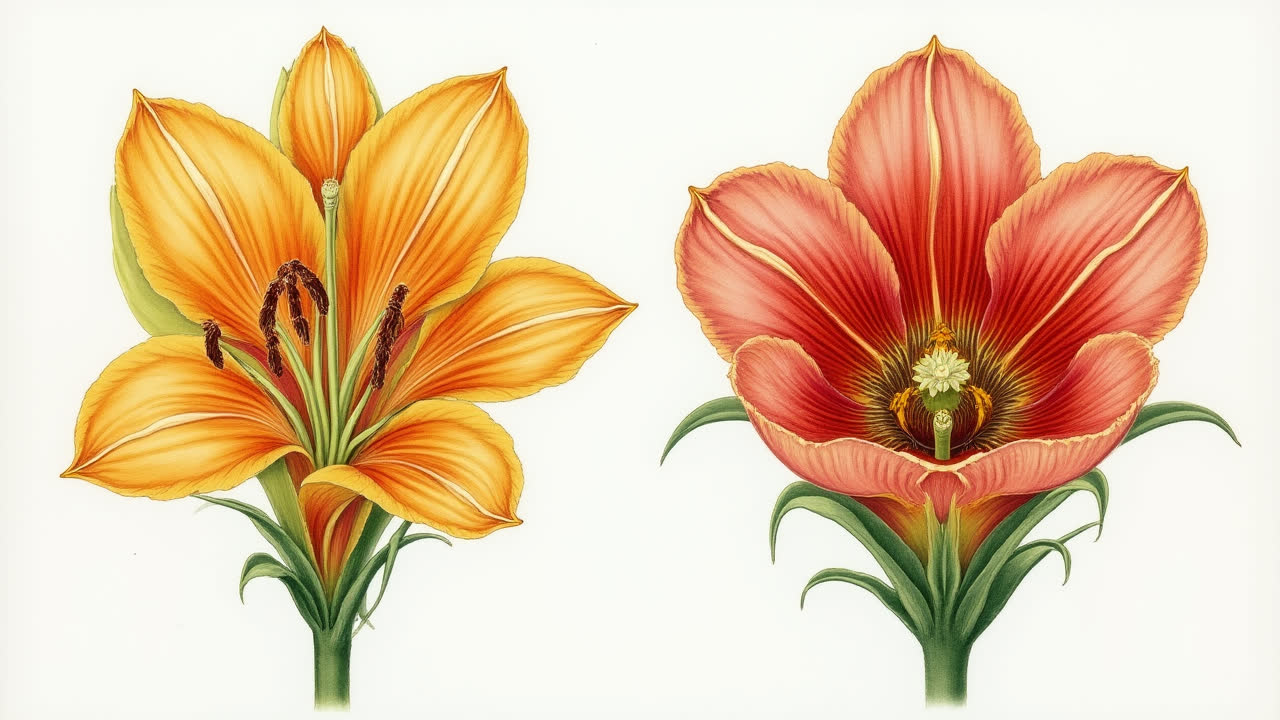
A carpel is the basic unit of the female reproductive structure in a flower. Botanically speaking, it's considered a modified leaf that has evolved to bear and enclose ovules (unfertilized seeds). Each complete carpel consists of three main parts: the stigma, style, and ovary. The stigma is the sticky or feathery portion at the top that captures pollen grains. The style is the narrow, elongated section that connects the stigma to the ovary. The ovary is the enlarged basal portion that contains one or more ovules, which develop into seeds after fertilization.
I once examined a lily flower under a microscope in my botany class, and it was fascinating to see how the carpel's structure perfectly facilitated the plant's reproduction. The sticky stigma was covered with tiny hairlike projections designed to trap pollen, while the hollow style created a perfect channel for the pollen tube to grow down toward the ovary. Nature's engineering at its finest!
From an evolutionary perspective, carpels represent a significant advancement in plant reproduction. They evolved from leaflike structures called megasporophylls, which bore exposed ovules. By folding and fusing to enclose these ovules, carpels provided protection and created a controlled environment for fertilization and seed development. This innovation contributed significantly to the success of flowering plants by protecting the developing seeds from environmental stresses and predation. The evolution of carpels was a crucial step that helped angiosperms become the most diverse and widespread plant group on Earth.
What is a Pistil?
The term pistil refers to the female reproductive unit of a flower, but its relationship to carpels depends on the flower's structure. A pistil can be formed from a single carpel (simple pistil) or from multiple carpels that have fused together (compound pistil). This distinction is where much of the confusion between carpels and pistils arises. In flowers with simple pistils, each pistil corresponds to a single carpel. However, in flowers with compound pistils, multiple carpels fuse to form a single pistil structure.
Like carpels, pistils also consist of a stigma, style, and ovary. The number of these components can provide clues about the number of carpels that make up a pistil. For example, a pistil with three styles or a three-lobed stigma typically contains three fused carpels. The ovary of a compound pistil may have multiple chambers (locules), usually corresponding to the number of carpels involved.
Pistils demonstrate the remarkable diversity in flower structure across plant species. Some flowers, like those in the buttercup family, have multiple simple pistils arranged in a spiral or whorl. Others, like lilies, have a single compound pistil formed from three fused carpels. And still others, like cherries, have just one simple pistil containing a single carpel. This diversity reflects the evolutionary adaptations of different plant lineages to various reproductive strategies and environmental conditions.
Key Differences Between Carpel and Pistil
| Feature | Carpel | Pistil |
|---|---|---|
| Definition | Basic unit of female reproductive structure | Complete female reproductive structure |
| Structure | Always consists of stigma, style, and ovary | May consist of one or multiple fused carpels |
| Relationship | Component part of a pistil | May contain one or more carpels |
| Counting method | Count number of styles or stigma lobes | Count number of separate ovaries |
| Botanical notation | Indicated by number in parentheses in floral formula | Indicated by "G" in floral formula |
| Evolutionary origin | Evolved from megasporophylls (modified leaves) | Evolved as organizational unit of carpels |
| Example of single unit | One carpel in a cherry flower | Simple pistil in a pea flower |
| Example of multiple units | Three carpels fused in a lily flower | Multiple separate pistils in a strawberry flower |
Functional Roles in Plant Reproduction
While the structural differences between carpels and pistils are important for botanical classification, their functional roles in plant reproduction are essentially the same. Both structures serve the female reproductive function in flowers, supporting the processes of pollination, fertilization, and seed development. When pollen grains land on the stigma, they germinate and grow pollen tubes down through the style to reach the ovary. There, the sperm cells are released to fertilize the ovules, which then develop into seeds.
The specific configuration of carpels and pistils can influence reproductive strategies and success. For instance, flowers with multiple pistils can produce more seeds per flower, increasing reproductive output. Compound pistils with fused carpels may provide better protection for developing seeds or support more efficient pollination mechanisms. These variations reflect adaptations to different ecological niches and pollination syndromes.
I remember walking through a botanical garden last spring and noticing the incredible diversity of pistil structures across different flowering plants. From the single pistil of a tulip to the numerous tiny pistils covering a strawberry flower's receptacle, each arrangement seemed perfectly suited to that plant's particular lifestyle and environment. It's mind-boggling to think about how these structures have been fine-tuned through natural selection over millions of years!
Beyond their reproductive functions, carpels and the pistils they form eventually develop into fruits after fertilization. The ovary wall typically becomes the fruit tissue, while the ovules develop into seeds. This transformation showcases another critical role of these structures: seed protection and dispersal. The incredible diversity of fruits we see today – from fleshy berries to dry capsules – all began as carpels within the flower. This connection between flower structure and fruit type illustrates the developmental continuity in plant reproduction and the central importance of carpels and pistils in the plant life cycle.
Examples in Common Flowers
Looking at examples from common flowers can help clarify the relationship between carpels and pistils. In simple flowers like cherry blossoms, there is typically a single carpel forming a single simple pistil. The resulting fruit – a cherry – develops from this single carpel. In contrast, apples have a compound pistil made up of five fused carpels. When you cut an apple crosswise, you can see the five-chambered structure that corresponds to these original carpels.
Some flowers have more complex arrangements. Strawberry flowers have numerous separate carpels, each forming its own simple pistil. After fertilization, each carpel develops into one of the small "seeds" (actually tiny fruits called achenes) on the surface of the strawberry. The red fleshy part we eat is actually derived from the flower's receptacle. Buttercups similarly have multiple separate carpels and pistils, resulting in a cluster of small fruits.
Lily flowers demonstrate yet another configuration, with three carpels fused to form a single compound pistil. This is evident in the three-chambered ovary that develops into a three-chambered fruit capsule. Studying these diverse examples helps illustrate how carpels and pistils relate to each other in different flower types and how their arrangement influences the resulting fruit structure.
Frequently Asked Questions About Carpels and Pistils
Can a flower have carpels but no pistil?
No, a flower cannot have carpels but no pistil. By definition, if a flower has one or more carpels, it has at least one pistil. This is because carpels are the building blocks of pistils. A single carpel forms a simple pistil, while multiple fused carpels form a compound pistil. If a flower has separate unfused carpels, each carpel functions as its own simple pistil. Male flowers lack both carpels and pistils, possessing only stamens as their reproductive structures.
How can you tell how many carpels are in a pistil?
You can determine the number of carpels in a pistil by examining several features. The most reliable indicators are the number of styles or style branches, the number of stigma lobes, and the number of chambers (locules) in the ovary. For example, a pistil with three styles or a three-lobed stigma typically contains three carpels. Cross-sectioning the ovary can reveal the number of locules, which usually corresponds to the number of carpels. In some cases, the number of suture lines or ridges on the exterior of the ovary can also indicate the number of carpels that have fused to form the pistil.
What is the evolutionary advantage of fused carpels?
The fusion of multiple carpels into compound pistils offers several evolutionary advantages. First, it provides better protection for ovules by creating a more robust structure. Second, a compound pistil can support more efficient pollen reception and distribution, as pollen landing anywhere on the stigmatic surface can potentially fertilize ovules in any of the carpels. Third, fusion creates opportunities for more complex fruit development, allowing for specialized seed dispersal mechanisms. Finally, carpel fusion can result in more efficient resource allocation during fruit and seed development, as the plant can selectively abort parts of the fruit if resources are limited. These advantages have contributed to the widespread occurrence of compound pistils among flowering plants.
Conclusion
Understanding the difference between carpels and pistils clarifies an important aspect of flower anatomy and plant reproduction. While the terms are sometimes used interchangeably, they represent different levels of organization in the female reproductive structures of flowers. Carpels are the basic units, consisting of stigma, style, and ovary, while pistils refer to the complete female structures that may consist of one carpel (simple pistil) or multiple fused carpels (compound pistil).
This distinction isn't merely academic. It helps us understand flower development, evolutionary relationships among plant groups, and the connections between flower structure and fruit formation. The incredible diversity of fruit types we see in nature – from simple fruits like cherries to complex fruits like strawberries and apples – can be traced back to the arrangement of carpels and pistils in the original flowers.
Next time you examine a flower, try to identify its carpels and determine whether they form simple or compound pistils. This observation will deepen your appreciation for the complexity and elegance of plant reproductive strategies. After all, these small structures are responsible for the continuation of plant species and, by extension, much of the biodiversity that surrounds us.
References:
- https://science.csu.edu.au/herbarium/gynoecium/about/carpel-pistil
- https://www.britannica.com/science/pistil
- http://cnx.org/contents/GFy_h8cu@10.53:rZudN6XP@2/Introduction
- https://commons.wikimedia.org/w/index.php?curid=49931514
- https://archive.org/stream/cu31924001824907/#page/n155/mode/1up
- https://archive.org/stream/cu31924001824907/#page/n155/mode/1up